
Where Are People Moving to in 2026? PODS Moving Trends To Watch
Moving Trends

Where are people moving to in 2026? For the last half-decade, PODS has analyzed moving statistics from customers to report on the top cities people are moving to and to spot the latest moving trends. In addition to the most popular cities and states to move to, we also take a look at the cities and states people are leaving — and why.
| Planning a move in 2026? Start by getting a free moving quote from PODS. |
Our annual moving statistics are collected from real PODS customers, and this year we’ve paired this data with feedback from our inaugural Moving Mindset Study. This voluntary survey asked participants what motivated them to move, why they chose their new locale, and what the most important factors were when deciding whether to call a new place home. A balanced number of responses from several homebuying generations (Baby Boomers, Gen X, Millennials, and Gen Z) allowed us to gain even more insight into generational differences affecting moves, too.
What we found was that affordability overtook career as the number one deciding factor for moving Americans, with 58 percent of respondents claiming it as a top motivator. Up next at 41 percent was community and connection. Interestingly, nearly half of those who moved said they would turn down a higher-paying job offer requiring a move in favor of staying close to their existing support system, signaling that community and a sense of belonging often matter more than money.
Our consumer data also let us know what wasn’t much of a deciding factor. Surprisingly, moving to a smaller city or states with better weather were low on the list of reasons people moved — both being assumed motivational trends, especially as smaller Sun Belt and Southeast cities and warm-weather states have taken top spots on our list for several years running.
While most of our moving trends data aligns with the sentiment from our Moving Mindset Study, a few cities on the list don’t fit the mold (we’ll get into those later). We’re continuing to see the usual strongholds in the top ranks of both our top 20 lists for move-ins and move-outs, though a few have shuffled positions a bit from last year. The lower half of the ranks on both lists includes a mix of swaps, returns, and brand new debuts, which is always exciting to dig into.
.jpg)
For the fourth year in a row, the Myrtle Beach-Wilmington area ranks No. 1 for most moved-to places, and — for the fifth year — Los Angeles reigns as the top city people are leaving.
What Are the Moving Trends in 2026? Key Takeaways
Q: What is the No. 1 state people are leaving?
A: Once again, California reigns as the number one state people are leaving, with seven cities on the top 20 list for move-outs. No region of the Golden State is exempt, as cities from Northern California, Southern California, and Central California all made the list — same as last year. However, the rankings are slightly different this go-around, with most cities falling down a few ranks.
Q: Where are most people relocating to?
A: At a micro level, the Myrtle Beach-Wilmington area continues to be the hottest market for move-ins, and Ocala is second. The Myrtle Beach-Wilmington area has now topped the list for the fourth year running, while Ocala has claimed the second spot for the third consecutive year — together setting another PODS record. Zooming out, the PODS Moving Trends data continues to show people are looking toward the Sun Belt states of Alabama, Florida, Tennessee, South Carolina, and North Carolina for their fresh start.
Q: What state is everyone moving to in 2026?
A: This year, it’s a tie between Florida and Tennessee when it comes to the most popular move-in state. Each of these southern spots has four cities on the list, though Florida technically takes the cake with three cities in the top 10. We’ve also seen double the number of Florida cities on the list this year, including the re-emergence of Sarasota for the first time since 2023. Tennessee holds strong with the same ranking markets as last year.
Q: What is the biggest moving month?
A: The majority of people move during the summer months of June, July, and August. These months mark the start of college academic terms, come with the most ideal weather conditions across the country, and younger kids are on a break from school. Keep in mind, this also makes them the most expensive months to move.
Q: Will 2026 be a good year to move?
A: More so than usual, this is a tricky question. This early in the game, it’s hard to tell — we’ve got a lot to keep our eyes on (see our Trends to Watch section below). Most likely, the answer is going to depend on individual factors, like where you’re looking to move and your personal financial situation.
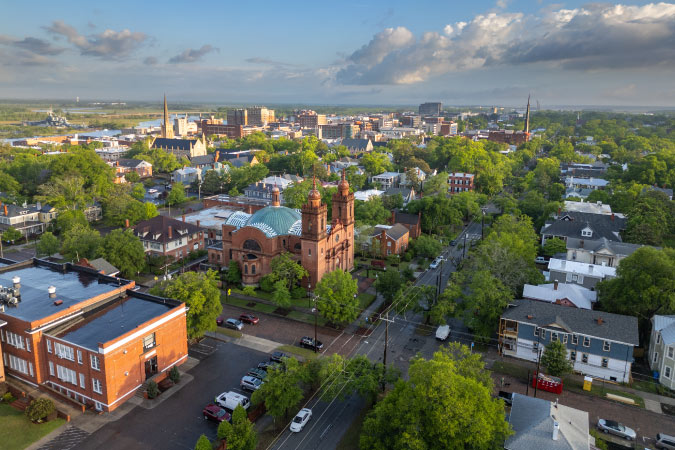
Once again, Wilmington, NC, proves to be one of the most popular places to move to in the country.
Top Cities People Are Moving to in 2026
Our top 10 closely mirrors last year, with the exception of Dallas-Fort Worth, Raleigh, and Greenville-Spartanburg, which all appeared last year in the top 10 but have done a little moving of their own. Myrtle Beach-Wilmington, SC/NC, and Ocala, FL, are still proving their permanence in the top two spots, making and breaking records once again.
Perhaps most shocking was the disappearance of two fan favorites that have made the list every year since its inception, Asheville and Portland (ME). Although Asheville was seemingly already on its way out (dropping from 10th in 2024 to 18th in 2025), Portland has always been in the top 15, even placing as high as 13th just last year. Atlanta, GA, and Greensboro, NC, also failed to make a reappearance this year. Additionally, the loss of Asheville and Greensboro has caused North Carolina to slip out of the rank as the top state people are moving to for 2026.
On the other side of the coin, we saw Grand Rapids, MI, make the list for the first time ever, while Phoenix, Orlando, and Sarasota made 2026 their comeback year.
| Curious how these insights compare to the summer season? Read our 2025 Summer Moving Trends report. |
Here’s a look at our full breakdown of the 20 top cities people are moving to in 2026, with their position from last year’s list in parentheses.
20 Top Cities People Are Moving to in 2026
| Rank | Market |
|---|---|
| 1 | Myrtle Beach, SC/Wilmington, NC (1st in 2025) |
| 2 | Ocala, FL (2nd in 2025) |
| 3 | Dallas-Fort Worth, TX (5th in 2025) |
| 4 | Raleigh, NC (3rd in 2025) |
| 5 | Greenville-Spartanburg, SC (4th in 2025) |
| 6 | Charlotte, NC (6th in 2025) |
| 7 | Boise, ID (7th in 2025) |
| 8 | Knoxville, TN (8th in 2025) |
| 9 | Sarasota, FL (Not ranked in 2025) |
| 10 | Jacksonville, FL (10th in 2025) |
| 11 | Nashville, TN (9th in 2025) |
| 12 | Spokane, WA (15th in 2025) |
| 13 | Chattanooga, TN (11th in 2025) |
| 14 | Phoenix, AZ (Not ranked in 2025) |
| 15 | San Antonio, TX (19th in 2025) |
| 16 | Orlando, FL (Not ranked in 2025) |
| 17 | Grand Rapids, MI (Not ranked in 2025) |
| 18 | Johnson City, TN (14th in 2025) |
| 19 | Dover, DE (20th in 2025) |
| 20 | Huntsville, AL (12th in 2025) |

Tennessee tied with Florida as the most moved-to states in 2026.
It’s Worth Reading Between the Lines
As mentioned, though North Carolina took home the gold last year as the most moved to state, two of its cities are off the list this year, forcing it to give up the crown. And so, this year, we’ve got a tie between Florida and Tennessee as the most moved to states in 2026. (When it comes to affordability, it looks like it helps when residents have no state income tax.)
In last year’s report, we touted the Tennessee Takeover, but we also highlighted the fact that Florida’s migration numbers were on the decline. This year, both states made a showing with four cities on the top 20 list for most move-ins, but zooming in on the data, we’ve noticed their roads to victory are quite different — and North Carolina may not be in as shabby a shape as it seems.
For example, although North Carolina’s market cities dropped from six to three this year, the state is still having some of the highest migration numbers in the country, according to U.S. Census Bureau data. In fact, it’s noted as having the third-highest population increase, with July 2025 numbers showing continuous growth since 2020 at 1.3 percent — though growth varies greatly by county, which is why it may not be reflected in our markets’ data.
The Tar Heel State’s demographer shared with The Daily Tar Heel that they’re seeing an influx of younger new residents relocating for higher education, the military, or first-time jobs, and that the state’s overall lower housing prices and access to nature are big draws. However, there are budget woes in North Carolina stemming from population growth outpacing revenue and public service growth, so only time will tell where this state stands in terms of move-ins.
The Tennessee Takeover May Be Done
Taking a closer look at Tennessee, all four of Tennessee’s 2026 ranking cities also ranked last year — and all but one have dropped down the list (Nashville slid down two slots to 11th, Johnson City went down four slots to 18th, and Chattanooga (a newcomer last year) slid down two slots. Knoxville is the only city that has held its position, coming in at eighth for the last three years. Despite tying for the top move-in state, this overall downfall trend doesn’t look good for Tennessee, and neither does the fact that a Tennessee city debuted on the move-out list, too.
For many, the population boom in Tennessee — particularly the high number of Californians that relocated there — changed the vibe and community of their cities and towns, caused congestion, and has started to raise the cost of living from its appealing affordability. Given what we know about what movers want (and don’t want), we wouldn’t be too surprised if more Volunteer State market cities joined the move-out list next year.
There is some good news, though. Similar to North Carolina, Tennessee has had a 5.8 percent population increase since 2020, with a 1.2 percent increase between July 2024 and July 2025 per the latest U.S. Census Bureau report. However, Zillow reports a marginal 0.1 percent increase in home values for the state overall, though markets like Nashville, Johnson City, and Chattanooga experienced a drop in average housing values.

Florida is a popular place to move to — and from — thanks to a mixed bag of pros and cons that include no state income tax and high housing costs.
Florida: The Comeback Kid (Sort Of)
Florida’s gains this year — doubling the number of cities on the top 20 list and tying with Tennessee as the most-moved-to state — came as somewhat of a surprise. We’d predicted this blazing-hot pandemic market was starting to cool when it went from always having at least six cities on the move-out list to only two last year: Tampa Bay and South Florida.
This year, Ocala and Jacksonville hang on to their positions from last year, Ocala coming in second for the third year in a row, and Jacksonville holding onto 10th. Living in Ocala has likely remained popular because it offers so many sought-after characteristics for movers: No personal income tax, a landlocked location in Florida that’s not as vulnerable during hurricane season, a strong community, and access to swaths of nature, like the 600-acre Ocala National Forest and several natural springs. It’s worth watching, though, as the city’s cost of living slowly creeps up, even if it still comes in at below the national average index.
Meanwhile, Sarasota and Orlando, old favorites that didn’t make the cut in 2025, popped back up on this year’s list in ninth and 16th, respectively. And only South Florida was on the move-out list this year.
But don’t call it a comeback: Florida has recently received a lot of media coverage for its popularity as one of the top states people are leaving, notably from the likes of The Wall Street Journal and Fortune. The gist? The state’s rapid influx of wealthy residents from 2021 to 2023 has upped housing costs, natural disasters have caused insurance rates to skyrocket, and general affordability has all worked to dissolve Florida’s middle-class cohort, inciting an overall net migration loss. Worsening hurricanes and oppressive summer heat don’t exactly scream paradise either. As of April 2026, Zillow also shows the housing market in Florida is down 4.1 percent year-over-year.
Retirement Favorites Win Big
The majority of our top-ranking cities sit within the Sun Belt and Southeast, but it’s always interesting to see which cities are outliers on the list — and what we’re seeing as far as outlier cities is backed up by our inaugural PODS Moving Mindset Study responses.
As mentioned, Florida’s Sarasota came in ninth, making its first debut since 2023 when it appeared as the second-most popular city for move-ins. It may seem like a bit of a shocker considering Sarasota’s cost of living is higher than the national average, and housing prices have shot up since the pandemic (though, according to Zillow, home values fell to $412,100 on average, a whopping 6.9 percent from March 2025 to March 2026).
Returning retiree favorites Dover, DE, and Boise, ID — and we see, after taking a year’s hiatus, the golden desert oasis (and numerous golf courses) of Phoenix made the list once again. All three of these cities draw retirees, have laid-back and welcoming communities, and offer easy access to nature and outdoor activities — checking the box for a majority of movers in our survey, though they are less affordable than some cities on the list. The cost of living in Phoenix and Boise is about 10 percent more than the national average, but is still lower than in most major metropolitan areas. Boise is also seeing a slight rise in home values, while Phoenix home values fell 2.7 percent (though both are still below $500,000 as of April 2026).
| Looking toward retirement? Check out the 10 Best Places To Retire in the U.S. on the PODS Blog. |
For those after affordability, Dover has excellent tax rates (fifth-lowest in the country), a cost of living just below the national average, and above-average healthcare (according to our PODS Moving Mindset Study data, this is a major consideration for the Boomer generation). At the moment, Dover’s housing market is on the up with average home prices sitting at $341,500, an increase of 1.5 percent over the prior year. It’s also just a hop, skip, and jump to larger cities like Baltimore and Washington, DC.
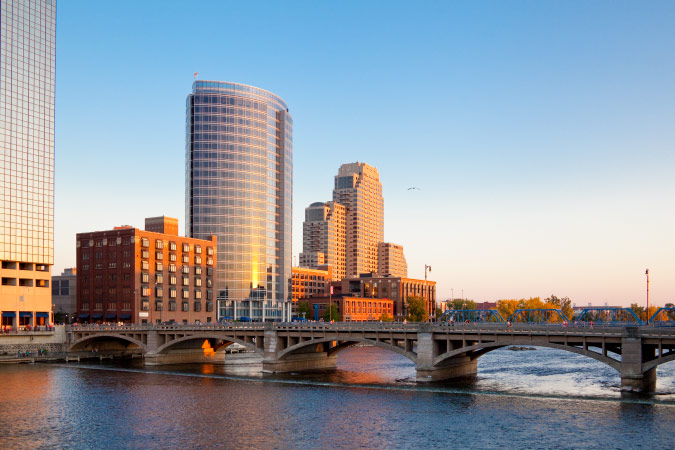
Grand Rapids is the only Midwest city on our list of top 20 move-in cities for 2026.
A Grand Welcome to Grand Rapids
One city worthy of its own shoutout this year is Grand Rapids, MI. Not only is it the only city on our list in the Midwest, but this is also the first year this outlier city has made it on our list of top cities people are moving to, quietly sneaking in 17th, between Orlando and Johnson City, TN.
As out of left field as it may seem for some, Grand Rapids’ gains didn’t come without effort. In 2015, the city approved a massive project dubbed GR Forward, an extremely ambitious plan focused on rejuvenating the downtown area. The plan included plans to triple minority demographics, get the rapids rolling again, and double downtown residency numbers. They may not have hit all targets just yet, but they’ve seen a 60 percent hike in the city’s downtown population, which is nothing to shake a fist at.
Plus, for the last five years, Grand Rapids has been Michigan’s fastest-growing metro, showing an overall three percent increase in population. And, although our data is showing job prospects as a lower-totem priority with movers, it doesn’t hurt that both the manufacturing and health sectors here are growing — enough for LinkedIn to name Grand Rapids its number one emerging city in the country (second on the list was Boise). LinkedIn cited and celebrated the city’s revamped industrial image, affordability, and vibrant culture.
Top 20 Cities and States People Are Leaving in 2026
Even though the Carolinas didn’t shine as bright in the move-in top 20, interestingly, all cities in the two states still hang tight in the top six, and neither state has any cities on the move-out list — unlike our two frontrunner states, Tennessee and Florida.
Tennessee's only city on the move-out list, Memphis, comes in at the bottom of the barrel, but it’s notably the first time it’s ever appeared. Meanwhile, Florida also has only one market on the list (South Florida), but it’s got the second-highest move-out numbers, moving up one slot from last year’s third place.
Eighty percent of the most popular cities where people are moving to are in the Sun Belt, up from 75 percent in 2025. Even though these cities are known for their sunny weather (hence the nickname), our PODS Moving Mindset Study gives us insight that their popularity likely has more to do with affordability than weather. This checks out with our data, as we’re seeing only 35 percent of the cities on the move-out list have northern locations, a 15 percent drop from last year.
The top-ranking states people are leaving are California and New York, with Los Angeles taking the number one spot again for its fifth straight year. In a surprising move, South Florida swapped ranks with Northern California, bumping the California stronghold to third. Meanwhile, Washington, DC, catapulted from 14th to fourth with a huge surge of move-outs. Baltimore and El Paso join Memphis as newbies to this year’s list.
Places we saw on the 2025 list that didn’t make the cut this year include Tampa Bay, Austin, and Philadelphia. Last year was Tampa Bay’s first time on the move-out list. The massive population boom for Austin and Tampa Bay in the last decade or so seemingly finally came to a head as prices have skyrocketed, space is a commodity, and traffic has become wildly congested.
| New starts: Here’s our report on Why People Are Leaving California (and where they’re moving instead). |
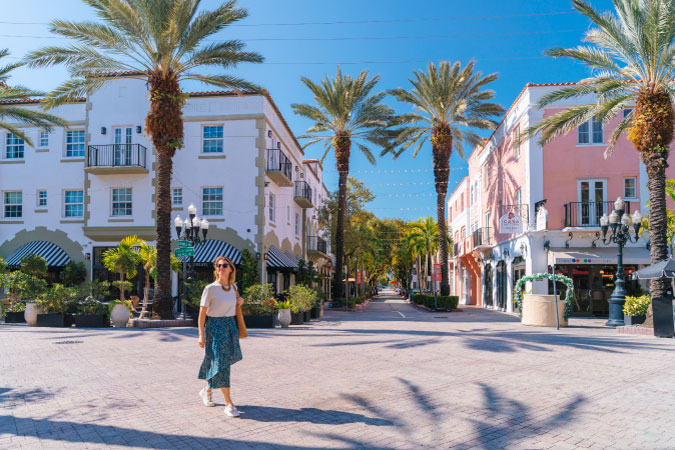
South Florida ranks second for cities and regions people are leaving in 2026.
20 Top Cities and Regions People Are Leaving in 2026
| Rank | Market |
|---|---|
| 1 | Los Angeles, CA (1st in 2025) |
| 2 | South Florida (Miami area) (3rd in 2025) |
| 3 | Northern California (San Francisco area) (2nd in 2025) |
| 4 | Washington, DC (14th in 2025) |
| 5 | Long Island, NY (Serving parts of NYC) (4th in 2025) |
| 6 | Central Jersey, NJ (6th in 2025) |
| 7 | Boston, MA (8th in 2025) |
| 8 | Hudson Valley, NY (9th in 2025) |
| 9 | Chicago, IL (7th in 2025) |
| 10 | San Diego, CA (5th in 2025) |
| 11 | Seattle, WA (12th in 2025) |
| 12 | Denver, CO (10th in 2025) |
| 13 | Baltimore, MD (Not ranked in 2025) |
| 14 | Stockton-Modesto, CA (13th in 2025) |
| 15 | Santa Barbara, CA (11th in 2025) |
| 16 | El Paso, TX (Not ranked in 2025) |
| 17 | Bakersfield, CA (19th in 2025) |
| 18 | Fresno, CA (17th in 2025) |
| 19 | Hartford, CT (15th in 2025) |
| 20 | Memphis, TN (Not ranked in 2025) |

For the fifth year in a row, the state with the most move-out cities on our list is California.
California Continues To Lose Residents
California can’t seem to catch a break. For the fifth year in a row, this West Coast state is home to the most move-out cities on our list. These seven markets are the same as previous years: Los Angeles, Northern California (San Francisco area), San Diego, Stockton-Modesto, Santa Barbara, Bakersfield, and Fresno.
It’s a smattering across the state with a high cost of living, the highest housing burden, and some of the country’s highest taxes. Plus, the highly destructive fires in Los Angeles County back in January 2025 destroyed tens of thousands of homes, displacing over 100,000 residents, some of whom have yet to recover. However, that said, we’re seeing every PODS market in California on the move-out list (save Sacramento), signaling this isn’t just a city-specific issue.
The silver lining for the Golden State is that we’re seeing nearly all seven markets move down the move-out list. While Los Angeles is steadfast at number one, Northern California was usurped by South Florida for second, San Diego plunged five ranks from fifth to 10th, Stockton-Modesto made a modest drop from 13th to 14th, Santa Barbara went from 11th to 15th, and Fresno saw improvement from 17th to 18th. The only city to gain momentum was Bakersfield, which went from 19th to 17th.
| Thinking of making a big move? Our moving checklist will help organize your out-of-state move. |
Washington, DC, Makes the Biggest Moves
The biggest jump this year belongs to Washington, DC, and that goes for both lists. The country’s capital skyrocketed a staggering 10 spots up on our top 20 move-outs list. Previously coming in 14th, it now sits just outside the top three in fourth.
It’s easy to lay the blame on political tensions, but DC has also seen a decrease in affordability. RentCafe puts the city’s average rent at $2,450 per month as of April 2026, while the average national rent comes in at $1,750. Meanwhile, Zillow shows a year-over-year 2.1 percent decrease in average home values ($582,900 as of March 2026), consistent with there being fewer buyers than sellers.
Perhaps most shocking is that the cost of living in Washington, DC, is at a whopping 51.2 percent higher than the national average index. These statistics alone go against what we know people are currently looking for.
Watchlist: Moving Trends 2026
Rising Costs: Mortgage Rates, Gas Prices, Living Expenses
Since buyers and sellers rely on inflation, cost of living, and mortgage rates to inform their budgets and purchasing power, it’s safe to say economic factors play a huge role in overall moving statistics. As our consumer survey echoes, people are increasingly interested in affordability — and with good reason.
The U.S. Bureau of Labor Statistics’ consumer price index tracks the costs of goods and services across several markets and is used as a strong inflation indicator. Unfortunately, it doesn’t look like Americans will be catching a budget-friendly break anytime soon. The latest April 2026 report shows a 3.3 percent rise in the consumer price index from March 2025 to March 2026, a higher-than-average nearly 1 percent jump in just one month from 2.4 percent reported for February. It’s an extra hard pill to swallow, considering this time last year, the consumer price index fell 1.1 percent year-over-year. Some contributing factors? Growing national debt, last year’s tariff hikes, and petroleum prices.
Perhaps unsurprisingly, the biggest increase was in energy, signaling that the ongoing war with Iran has already begun to strongly affect the U.S. economy, negatively — and it’s likely to just get worse before it gets better, as many experts have predicted recovery from the closure of the Strait of Hormuz will take several months or even years, even if it were to open immediately.
Since oil prices directly influence mortgage rates, we can likely expect to see higher mortgage rates in the coming months, although, as of April 30, 2026, Freddie Mac reports they are a fraction of a percent lower than this time last year at 6.3 percent for a 30-year fixed mortgage versus 6.76 percent.

Less than a third of movers (28 percent) are moving for a job opportunity — which may be due to increasing job market anxieties.
Fear About the Job Market
Our survey also revealed that less than a third of movers (28 percent) are moving for a job opportunity. This is likely due to increasing job market anxieties. In fact, according to Fortune, less than a quarter of workers feel confident in the stability of their jobs. This is likely to affect moves to cities with huge tech sectors (such as Austin, a previously popular move-to city, which didn’t even make the list this year) or in other industries where layoffs have been steadily occurring.
Whether it’s tagged as restructuring, a return-to-office mandate, or corporate budget cuts, job cuts have been brutal. Last year marked the highest number of layoffs since 2020, leaving people in a lurch and on the edge of their office chairs as economic uncertainty and AI adoption grow. At the same time, hiring has reached its lowest point in 15 years, according to a report from Challenger, Gray and Christmas.
The University of Michigan’s Survey of Consumers reported its lowest consumer sentiment rating since the survey's inception over 70 years ago. So, it’s no surprise people will be less likely to buy and more likely to sell under these circumstances. The proof of the economic strain and social factors affecting moving trends can already be seen in the pudding — or should we say rising number of housing listings — and subsequent lower prices.
Motivated Sellers and Thoughtful Buyers
As it stands right now, there are more sellers than buyers in the market. Prospective buyers are likely still seeing some inflated home prices coupled with rising mortgage rates and wondering if it’s the right move to buy into a pricey home with a higher mortgage rate than they already have.
Normally, we’d call high inventory and lowering prices a buyer’s market, but considering the current uncertainty in the economic market, possible disruption of supply chains, and rise in fuel prices, we’re not so quick to make that call.
Our prediction? We’ll see more motivated sellers and more thoughtful buyers as economics begin to play a larger role in affordability and purchasing power. Investors are likely to snatch up well-priced properties, while everyday buyers will give these large purchases more thought, weighing up their risk versus reward. As a result, moving may slow, and, as our Moving Mindset Study already shows, we’re likely to see young professionals moving to areas of stability and affordability, while retirees seek out more health-focused locales with outdoor access and tax breaks, regardless of the job market prospects.
| Cities offering moving motivation: Find out about the Six States That Will Pay You to Move There. |
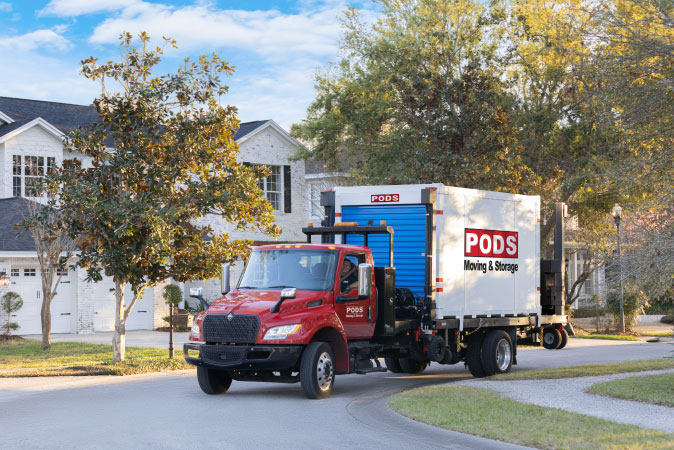
Whether you decide to relocate locally or across the country, you can count on PODS to make your move flexible.
While we can’t predict how things will shake out with the economy, job market, or AI, one thing we’re sure of is that you can always count on PODS to help facilitate your fresh start. You can even get to work before you move with helpful moving tips and hacks on the PODS Blog. Once you’re ready, have a convenient portable moving container delivered right to your front door. Need packing and loading assistance? No problem, PODS can refer you to local packing and loading assistance. Find a size and schedule that works with your specific move, and take your time getting there with the first month of storage built into the cost of every move.
Visit PODS online for a free local moving quote or call 877-350-7637 for long-distance moving.
Editor’s note: For ease of reading, monthly rental prices were rounded to the nearest $25 and home values were rounded to the nearest $100.
Alex Keight is a writer who has lived — and moved — all over the country and the world. She is an expert at packing, whether it’s for a long-distance move or short weekend trip. When she’s not writing or on the move, Alex spends her time petting her cat, cooking up dishes in the kitchen, and buying way more books than she knows she’ll ever actually get to reading.

Your quote in 60 seconds
Get pricing tailored to your needs!
Related Articles