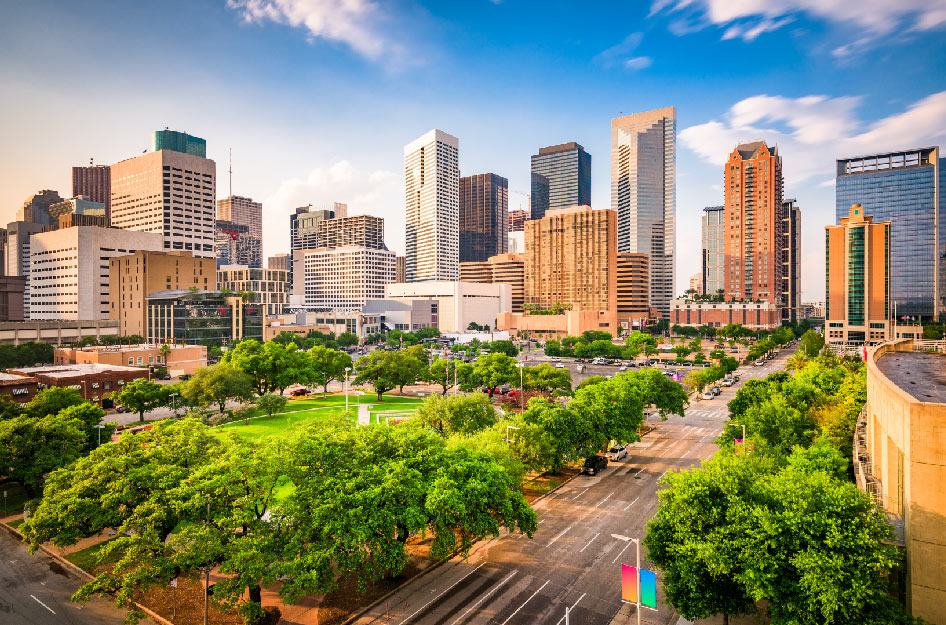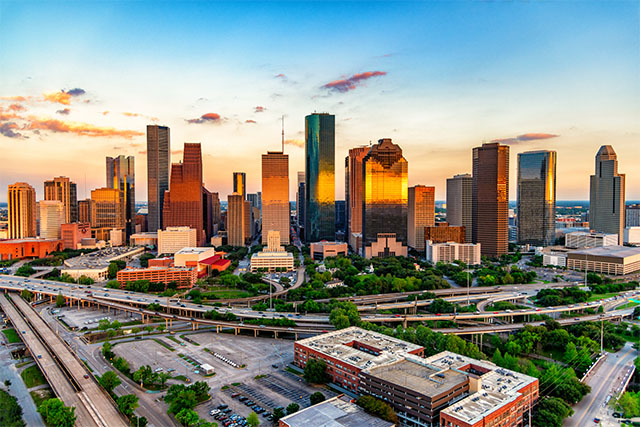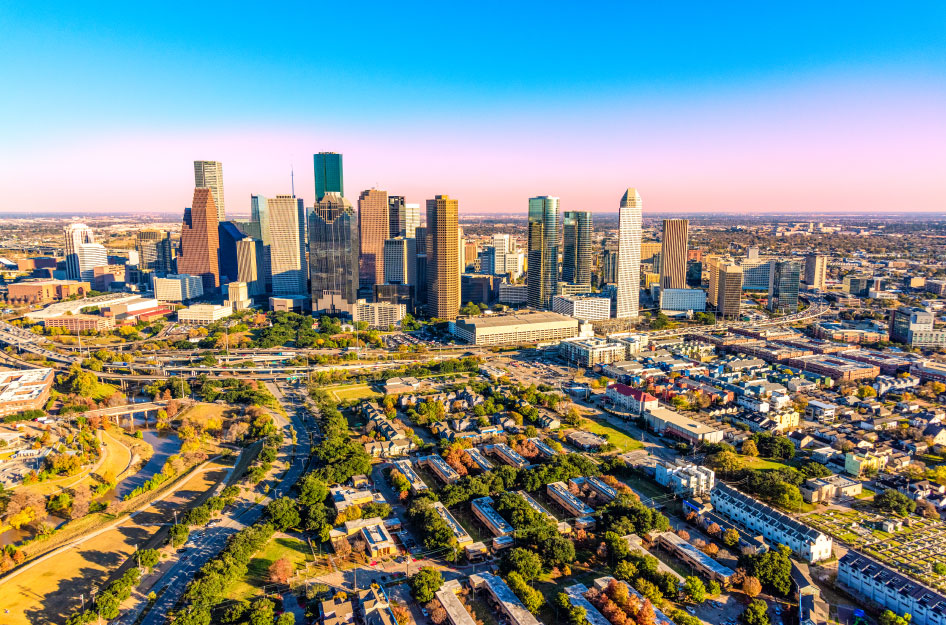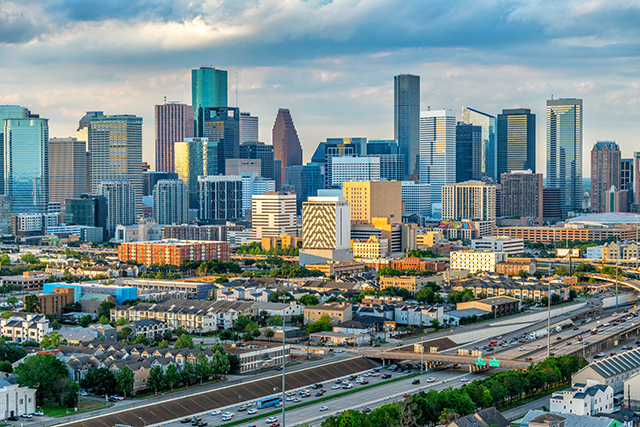
Living in Houston, Texas: 15 Things To Know Before You Take Off to Space City
HoustonTexas
TL;DR: Living in Houston, Texas
|
Houston is a big city in a big state, so there’s a lot to consider when relocating to this diverse, booming metropolis. From its vibrant food scene and melting-pot neighborhoods to affordable housing options and mosquito-laden humidity, here are some key things to know about living in Houston, Texas, before making your move.
| Planning a move to Houston? Start by getting a free moving quote from PODS. |
Houston at a Glance:
- The Houston metro, officially Houston-The Woodlands-Sugarland, teems with almost 7 million residents across a sprawling 9,444 square miles.
- Houston proper is home to 2.3 million residents over a 665-square-mile area.
- The metro makes up the southeast corner of the Texas Triangle, or “Texaplex” — a mega-region that includes the state’s four largest city areas: Houston, San Antonio, Austin, and Dallas-Fort Worth.
1. The Cost of Living in Houston, Texas, Is Below the National Average
H-Town gives your wallet a bit of a breather since the cost of living in Houston, Texas, is a smidge cheaper than the U.S. average. Houston’s cost of living is 3.1 percent below the U.S. average and 2.9 percent above the state average.
2. Houston Homes Are Affordable
If you’re looking for affordability in the Lone Star State, a safe bet is Houston. Housing costs are about 27 percent below the national average. Chicago homes, for example, are 14.6 percent more expensive on average, and Phoenix homes are a whopping 66.6 percent higher.
- Houston’s average home value: $265,000 — down 2.6 percent in the last year.
- National average home value: $373,000 — up 8 percent in the last year.
3. You’ll Find a Diverse Mix of Rental Options in All Price Ranges
The average monthly rent for apartments of all sizes in Houston is $1,350, which is about $400 lower than the national average of $1,750. But that doesn’t paint the entire picture. Living in Houston, Texas, means lots of options for housing, from one-bedrooms to luxury rentals. According to RentCafe:
- The most affordable Houston rentals can be found in Cranbrook Downs, where the average rent for a 1-bedroom is about $925 a month.
- The most expensive apartments are in University Place, Museum District, and Neartown-Montrose, with average monthly rents between $2,300 and $3,400.
Map of Houston’s 610 Loop
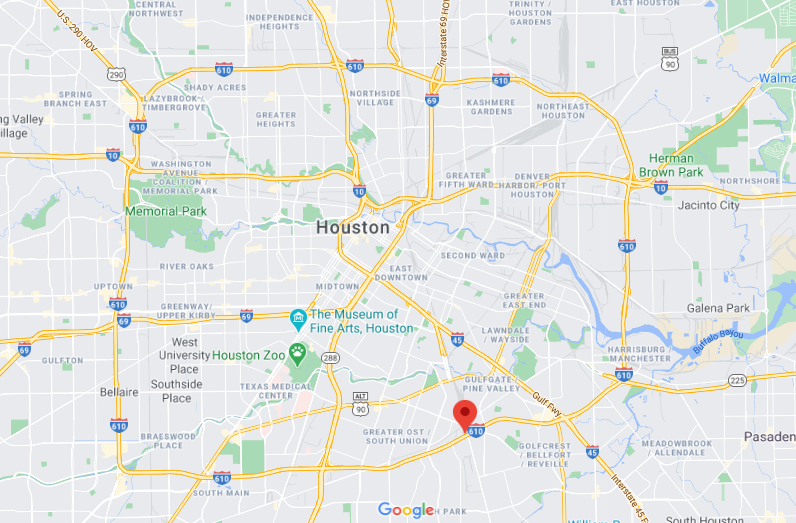
The day-to-day experience of living in Houston, Texas, differs depending on whether you live inside or outside “the Loop.”
(Source: Google Maps)
4. Looking for the Best Neighborhoods for Living in Houston, Texas? Think Inside and Outside “The Loop.”
The city’s urban center is enclosed by the square-ish Interstate 610 — what locals call “the Loop.” As you explore Houston neighborhoods, you’ll notice distinctions inside and outside this stretch of major highway.
Living inside the Loop comes with all the perks of city life: An easier commute, an elevated bar and restaurant scene, and a high concentration of museums and cultural events.
Here’s a quick look at some top Houston neighborhoods inside the Loop, plus one that’s right on the border:
Houston Heights
Located northwest of Downtown, The Heights is one of Houston’s most walkable communities, with a vibrant antique and dining scene unlike anywhere else in the city. Homes in this area have an average value of $616,600. Must visit: James Beard-nominated CasaEma for scrumptious pastries, breads, and coffees.
River Oaks
Just three miles west of Downtown and one of Houston’s oldest and most affluent neighborhoods, this historic community is protected by strict architectural standards and building restrictions. Mansions dating from the 1920s line the streets of River Oaks, where the median home sale price is a cool $2.2 million. One property that’s decidedly not for sale is the iconic Bayou Bend Collection and Gardens, part of the Museum of Fine Arts Houston.
West University Place
Just a mile from Rice University and 20 minutes from Downtown Houston, West U (as locals call it) is home to a thriving community. The neighborhood’s expansive park system, beautiful homes, and tree-lined streets are major draws, pushing the average home sale price to $1.8 million.
Greater Hobby Area
Though technically outside the Loop, the Hobby area is so close to the action (just 10 miles from Downtown) that the convenience factor is still strong — especially with its proximity to William P. Hobby Airport, a big plus for folks living in Houston, Texas. With an average home sale price of $239,000, this neighborhood is a great place for first-time homebuyers who have the courage needed to survive remodeling and home improvement.
Areas outside the Loop have a more low-key and suburban feel, with the best Houston suburbs typically offering homes in the $300K to $500K range. They feature family-friendly neighborhoods and top-rated public school districts, but there’s urban sprawl to contend with.
Here’s a quick overview of some of the best suburbs for living in Houston, Texas, outside the Loop:
The Woodlands
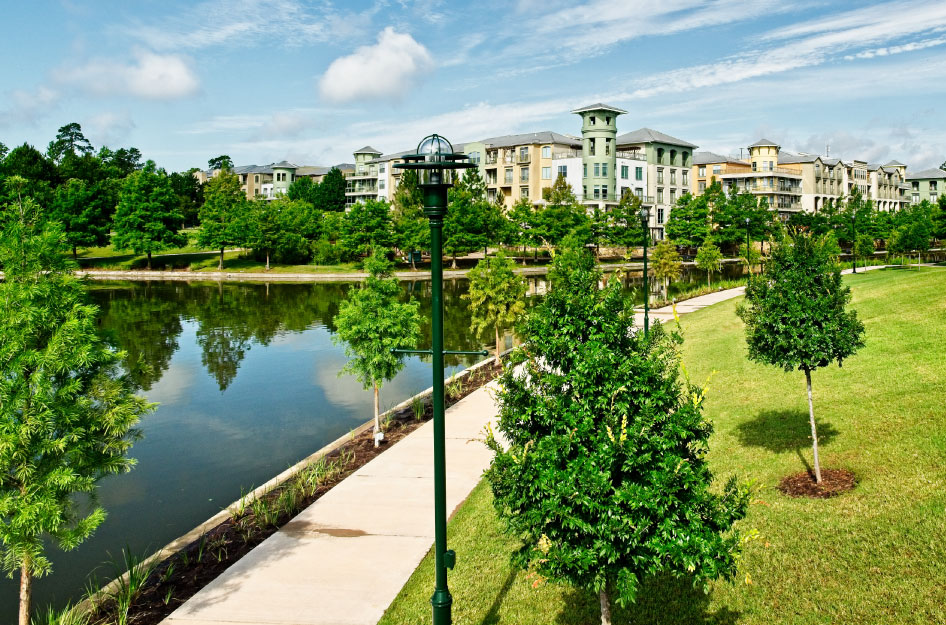
About 30 miles north of Downtown Houston, The Woodlands is an award-winning master-planned community that balances nature with business, innovation, and neighborhood living. The Woodlands’ nine residential villages and Town Center with over 2,000 businesses sit on 28,500 acres — nearly 8,000 acres of which is still open space. The Woodlands’ median home sale price is $640,000. And even here, residents still consider themselves living in Houston, Texas.
Sugar Land
About 20 miles southwest of Downtown Houston, Sugar Land offers small-town hospitality with big-city amenities. The median home sale price here is $480,200, but when you see the collection of master-planned communities with golf courses, lakes, highly-rated schools, and convenient dining and shopping, you’ll wonder why it isn’t more!
Moving to Texas? Check out these articles from the PODS Blog: |
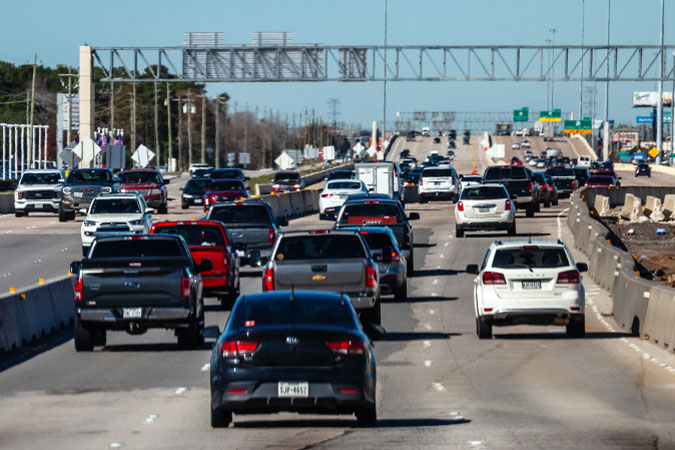
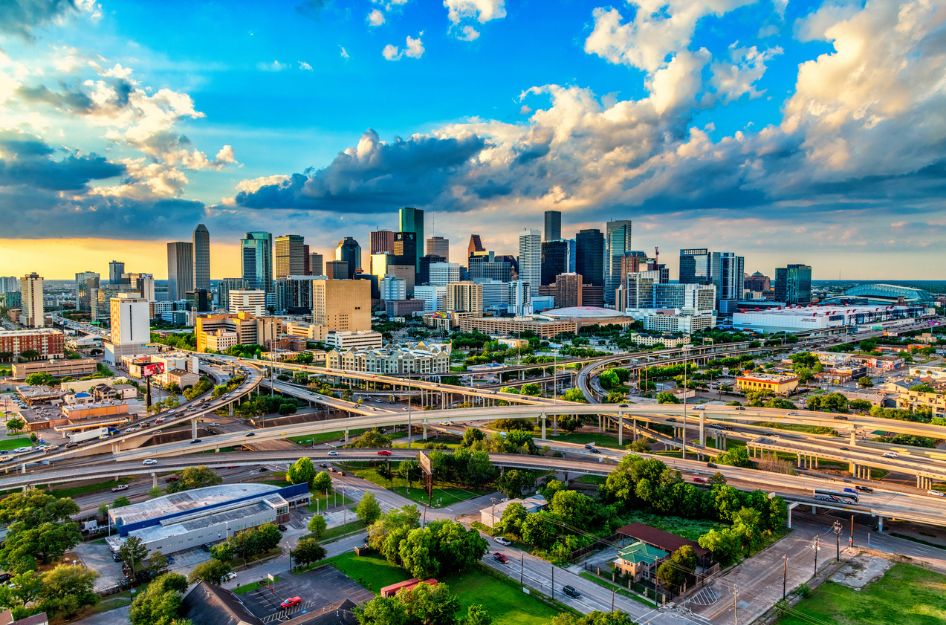
Living in Houston, Texas, means spending more time on the road than most Americans.
5. Commuting Here Is No Cakewalk — But It’s Not the Worst
Living in Houston, Texas, means spending more time on the road than most Americans, with some parts of the metro averaging an hour or more each day, based on government traffic studies. Although there’s a light rail system with three lines covering about 22 miles, the car culture runs strong in Houston.
Efforts are underway to improve the city’s transportation infrastructure, including continued expansion of the city’s bus routes, improved sidewalks, and extension of the light rail system. And, like any other major city, some neighborhoods are more commutable than others. The most transit-friendly neighborhoods in Houston tend to be around Downtown and the southern portion of the Loop.
6. Houston’s Diversity May Surprise You
According to WalletHub, Houston is the fifth-most diverse large city in America, with high-diversity scores across multiple metrics, including socioeconomics, culture, economics, and religion. Interestingly, Houston ranks just above New York City, which one might assume would have the top spot.
Houston is home to several international communities and cultural enclaves, including a packed roster of festivals and trade shows. Visitors from all over the world travel annually to attend the city’s large-scale industry and cultural events, including the Bayou City Art Festival, Houston Auto Show, Houston Fashion Week, Houston Pride Parade, and, of course, the Houston Livestock Show and Rodeo.
7. You Can Call it “Space City,” the “Bayou City,” or Choose From a Bunch of Other Nicknames
Houston has so many nicknames that there’s a Wikipedia page just to help you keep them straight. But the two most popular are “Space City,” because it’s home to NASA’s Johnson Space Center, and “Bayou City,” for the 22 meandering waterways that wind through the area. Living in Houston, Texas, means the best of both worlds — reaching for the stars, and staying grounded in the earthbound beauty of the Lone Star State’s parks, rivers, and open spaces.
8. The Bayou City Has a Lot of Superlatives
Maybe it’s the “Don’t Mess with Texas” effect, but Houston is really good at being big and setting records. Here are just a few good things about Houston:
- Texas Medical Center in Houston is the largest medical complex in the world.
- Houston’s Galleria is the biggest mall in Texas and the third-largest in the U.S.
- Houston is home to the Astrodome, the world’s first domed air-conditioned stadium.
- The BAPS Shri Swaminarayan Mandir is the largest Hindu temple in Texas and the first of its kind in North America.
- The Houston Grand Opera is the only opera company that has won all three major awards — Grammy, Tony, and Emmy.
- Houston is Beyoncé’s hometown. Consider that a triumph in itself!
9. K-12 Parents Look to the Suburbs, While Higher-Ed Students Love Living in Houston Proper
Is Houston a good place to live for families? Yes, it’s great for those interested in a quality education for their children. Here’s why Houston parents with school-aged children tend to prefer the suburbs, while college students flock to the city:
- Most top-rated public schools in Houston are located in surrounding suburbs outside of Houston’s Loop.
- The greater Houston area has 14 major institutions of higher learning, including the University of Houston, Texas Southern University, and Rice University.

Living in Houston in the summer means contending with a hot and humid climate.
10. Most Don’t Like the Weather in Houston, But Some Love It
Is Houston safe from weather disasters? Let’s just say, if you like heat, you’ll love Houston. The city has a hot and humid subtropical climate, with low temperatures around 40°F in January and highs around 95°F in August. The city experiences plenty of rainfall throughout the year, some dry spells in summer, and occasional bouts of severe weather blowing in from the Gulf of Mexico. Besides the heat and humidity, here are two important factors to consider about living in Houston, Texas:
- The risk of flooding is increasing in Houston, not only from hurricanes like Harvey, which pounded the city in 2017, but also from other weather events. Before choosing a home, check this guide to avoid areas prone to flooding.
- If you have respiratory issues, you may have trouble with Houston’s air quality. Pollution from heavy chemical industries, high temperatures, and long runs of rain and humidity combine to create difficult conditions for residents with asthma, allergies, and lung problems.
11. The Crime Rate Is High, But There Are Ways To Feel More Secure
Is Houston safe? Depends on where you are in the city. You should be aware that Houston’s crime rate is ranked higher than many U.S. cities, according to data from NeighborhoodScout, which compiles the latest statistics from the FBI and other law enforcement sources. In Houston, residents have a 1 in 22 chance of being the victim of property crime — such as burglary, car theft, or arson. As for violent crime (murder, rape, armed robbery, or aggravated assault), there’s a 1 in 86 chance.
But living in Houston, just like in most major U.S. metros, you’ll find that crime varies from neighborhood to neighborhood — sometimes even block to block. Do your research and select the area that fits your comfort zone. And some good news: A citywide crime-reduction effort is underway, focused on some of the areas more prone to trouble.
12. Houston’s Job Market Offers Plenty of Opportunities
Houston’s economy is huge, with an estimated 3.5 million people employed in non-farm jobs across the Houston metro area. In fact, Houston’s city limits contain the second-highest number of Fortune 500 headquarters of any U.S. municipality, after New York City (and tied with Chicago). Houston’s top industries include energy (oil and gas extraction), life sciences, aerospace and aviation, manufacturing, digital technology, and transportation.
The fact that Texas is one of nine U.S. states without any personal state income tax helps those living in Houston with budgeting and creates growth-driven venture opportunities, but the tradeoff comes in cuts to government-led funding and initiatives.
13. The Houston Dining Scene Is a Foodie’s Paradise
Is Houston a good place to live for foodies? You bet — living in Houston, Texas, is deliciously satisfying! With more than 10,000 restaurants representing over 70 countries and American regions to choose from, it’s no wonder Houston’s dining scene has been compared to the likes of NYC. In 2026, the James Beard Foundation honored two Houston-area chefs: Maximo’s Adrian Torres was named Best Emerging Chef on the national level, and Evelyn Garcia and Henry Lu of Jun took home the Best Chef award for the state.
14. These Are the Top 5 Things To Do in Houston
If you’re new to the Bayou City and want to start living in Houston like a local, check off these tried-and-true Houstonian hits:
- Museum Exhibits: Attend rotating exhibits and performances in the Museum and Theater Districts.
- Distillery Tours: Take a dozen or so distillery tours; you won’t run out anytime soon.
- Major League Baseball Games: Buy season tickets for the Houston Astros.
- Space Center Exhibitions: What’s it like to live in Houston, TX — home of the NASA control center? Maybe not exactly what you see in the movies, but check out the year-round exhibitions at Space Center Houston for a firsthand look.
- Parks and Rec: Escape to Hermann Park and Buffalo Bayou, and a little farther afield, visit the Houston Arboretum and Nature Center (10 miles west of Downtown Houston), Big Thicket National Reserve (1.5-hour drive), and Padre Island National Seashore (4-hour drive).

It’s not uncommon for those living in Houston and other Lone Star cities to feel a sense of Texas pride.
15. Texans Love Texas
Something you’re sure to notice in your first weeks of living in Houston, Texas, is the Lone Star pride coursing through the veins of each and every local. This isn’t just a Houston thing either; you’ll find it throughout the state. The Texas flag flies high beside Ol’ Glory everywhere you look. And, while it may seem odd at first, we’re confident that after tasting enough BBQ, seeing enough Astros games, and dancing enough honky-tonk, you’ll start to experience it for yourself.
Living in Houston — FAQs
Q: Is Houston a good place to live?
A: You know the saying “Everything’s bigger in Texas”? Well, living in Houston, Texas, is the perfect embodiment of that sentiment. The city is so vast and varied from zip code to zip code that there’s quite literally something for everyone. Yes, urban sprawl feels like it was invented here, and the crime rate is not great. But with its vibrant cultural offerings, range of diverse neighborhoods and opportunities, and affordability, living in Houston, Texas, gets a Lone Star-sized thumbs up.
Q: Is $100,000 a good salary in Houston?
A: Yes, $100,000 per year is a relatively good salary to live comfortably in Houston — depending on your lifestyle and needs, of course. According to the MIT Living Wage Calculator, a single adult with no children needs to earn around $46,000 after taxes for basic needs to be met. To determine how much you’d need to live comfortably in Houston, use the 50/30/20 rule: 50 percent of your after-tax income for needs, 30 percent for wants (entertainment, dining out), and 20 percent for savings. Using that rule, you’d need to earn closer to $92,000 annually to be comfortable while living in Houston, Texas.
Q: Why is Houston called Crush city?
A: We can thank the Astros and their sensational 2015 season for the “Crush City” nickname. That year, Houston’s boys of summer hit more than 230 home runs — one of the highest totals in all of Major League Baseball.
Q: What are the biggest challenges of living in Houston?
A: Every big city has its pros and cons, right? Some of Houston’s hurdles include the summer’s intense heat and humidity, the risk of hurricanes and flooding, and the sprawl that seems to stretch endlessly in every direction. That’s not just about aesthetics, of course: Over-development is straining infrastructure and adding to the city’s already-annoying traffic and commute times.
Moving to Houston With PODS
Decided that living in Houston is right for you? Make your move to Houston flexible with PODS portable moving containers. PODS will deliver a portable storage container right to your driveway, where you can pack at your convenience, on your own schedule. Every move has one month of storage built into the final cost, so you don’t have to feel rushed. Need help with the heavy lifting? PODS can even connect you with local packing and loading services for a little extra muscle.
Start planning your move today. Visit PODS online for a free local moving quote or call 877-350-7637 for long-distance moving.
Amelia England is a content writer and regular contributor to the PODS Blog. Between college, grad school, and seasonal adventures, she has downsized and relocated over 25 times.
Editor’s note: For ease of reading, monthly rental prices were rounded to the nearest $25 and home values were rounded to the nearest $100. Home values in the millions were rounded to the nearest $100,000.
*This article was written on behalf of PODS Enterprises, LLC (“PODS”). PODS does not warrant the completeness or accuracy of any information contained in this article and disclaims any liability for reliance upon the content herein.

Your quote in 60 seconds
Get pricing tailored to your needs!