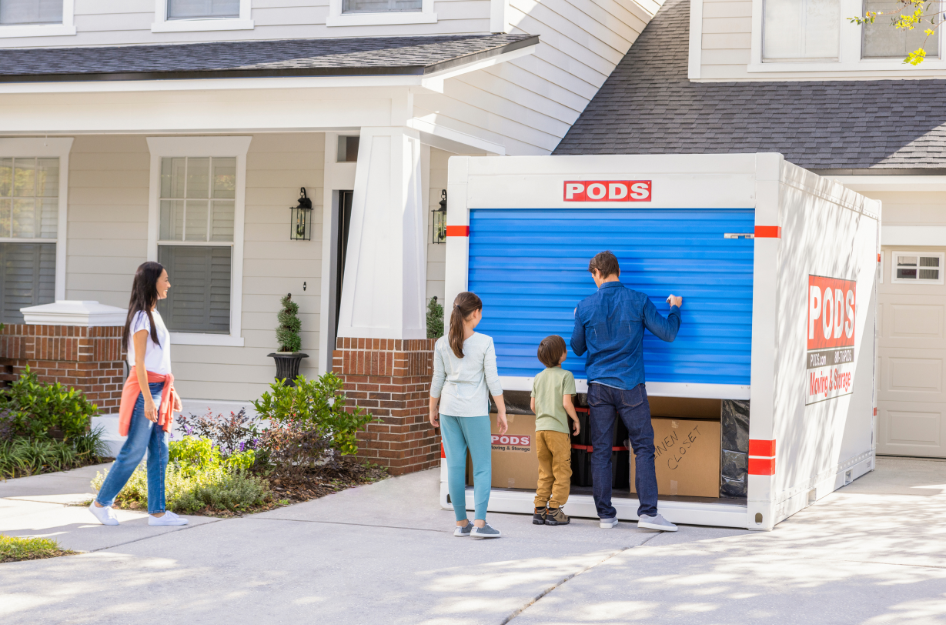
How to Pack Books for Moving Without Wrecking Your Collection (or Your Back)
Packing Tips and Hacks
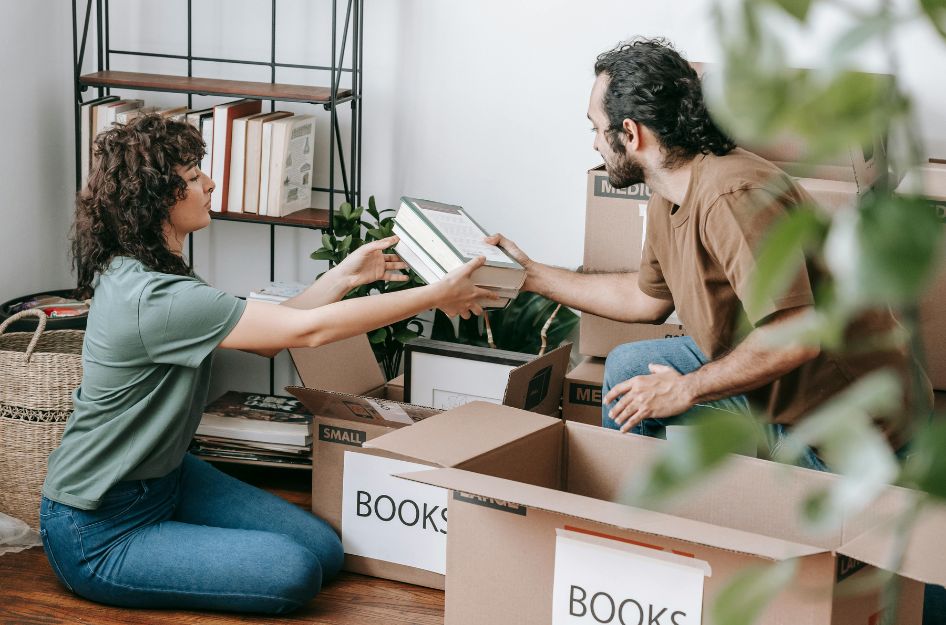
There are a few dilemmas book lovers and collectors have in common. First, there’s the overwhelming desire to buy or borrow books, knowing you have collections of unread volumes already waiting for you at home. Second, time just disappears when you get into a good read. And finally, when moving, there’s the biggest predicament of them all — figuring out how to pack books for moving without damaging your collection (or breaking your back). Everyone knows packing your home is a big task, but packing books for moving must be easy, right? It’s best not to judge a book by its cover.
There are some key factors that make packing up your favorite tomes less simple than you may have hoped. They’re heavy, sometimes delicate. They come in a variety of sizes and can be difficult to organize. And as they’re made of paper, books are especially susceptible to water damage. So, taking all of this into consideration, what’s the best way to pack books for moving? We have several tips for how to pack books for moving, so you can transport your bundles of reading joy efficiently and safely. Follow these tried-and-true tips for an organized, streamlined process to happily get your books from point A to point B.

Step one is to sort your books and determine which you’d like to keep and which you’d like to donate. This can take a (literal) load off your shoulders.
How To Pack Books for Moving: Breaking Things Down Into 6 Simple Steps
At this point, you may be telling yourself, “It’s tough enough packing my wedding china and kitchen glasses. Now I have to worry about my books, too?” We promise, learning how to pack books for moving is simple, and it makes the actual packing much easier. We’ve boiled the process down to six little steps, some of which may not be required if you’re not dealing with a large and/or expensive library (like this record holder).
1. Sort and Minimize Your Collection Before Packing Books for Moving
Always declutter before moving. This is an essential step for pre-packing anything — not just figuring out how to pack books for moving — and “minimize” is the name of the game here. Start by going through and sorting your books. Determine which ones you really want to keep (books you read again and again, books you want to read, and memorable gifts from loved ones), but be honest with yourself. That old textbook from college that you haven’t cracked open in 15 years can probably go, along with literary duplicates, any “just okay” reads, and novels that you plain disliked. Don’t be sad about letting them go. Give them to fellow readers or donate to charities and used bookstores.
Once you’ve finished, look through your “keep” pile once more to see if there’s anything else you can part with. If not, that’s okay. Just remember that books are heavy, and the best way to pack books for moving is to have fewer. The less you have, the more time, energy, and money you’re going to save. Besides, you’ll add more books to your library soon enough.

Before you start, make a checklist so you have all the necessary supplies and knowledge for how to pack books for moving — especially if you’re trying to protect rare books.
2. Assemble Your Book-Packing Supplies
Before you can start packing books for moving, you’ve got to get your moving boxes together. Sure, you could use second-hand boxes to cut costs while moving, but beware of their condition. A flimsy box could get crushed during your move, or the bottom could open (remember, books are heavy!). Either way, your books would suffer. Keep these things in mind when choosing your packing supplies:
- Only use small boxes for packing books when moving. Anything bigger is going to end up too heavy to move — which is dangerous for you and your volumes.
- Get acid-free tissue for wrapping your most special books.
- Use bubble cushioning roll, regular packing paper, or even crumpled up newspaper as space fillers to keep your books from moving around in their boxes.
- Have plenty of packing tape and a black marker handy (for labeling).
Lucky for you, Home Depot offers moving kits compatible with PODS portable moving containers — and they’ll deliver everything, or you can opt for free pickup at your local store.
| Looking for creative ideas on how to move books? Think outside the box (literally): Another solution to packing books for moving is to use suitcases and rolling luggage instead of boxes. Carry-on and overnight luggage are the perfect size for packing books without being too heavy — plus the wheels make it a piece of cake and the best way to move books, no contest! If you normally pack clothing in your luggage, just use boxes instead. Clothes are much lighter than books! |

Most of the time, the best way to pack books for moving is to place them upright in the box, just as you would arrange them on shelves. However, oversized books should be packed flat.
3. Make Sure You’re Packing Books Facing the Right Direction
Pop quiz: Should you pack books flat or upright? If you said that it’s better to pack books upright, you’ve won — undamaged books! Lightly dust and clean books before placing them in boxes for the best results. Most of the time, books should be packed upright (just as you would place them on a shelf) and shouldn’t be packed too loosely or too tightly. Oversized books should be packed flat, with the largest on the bottom and no more than three or four per box. Packing a book with its spine or fore-edge down will negatively affect the book’s structure and eventually deform it, so stick to upright or flat placements.
4. Protect Your Rare Books With Special-Handling Techniques
Figuring out how to pack books for moving is one thing, but what if those books are rare and valuable? Well, we already touched on acid-free packing paper to wrap books in, but you might want to take things a step further if you have enough special copies in your collection. Start by wrapping each book in acid-free tissue, then follow it up with a second layer of packing paper. From here, there are two routes you can take, depending on your preference. The first is placing each book inside a padded envelope to help accommodate its dimensions before boxing it up. The second is placing your rare copies in custom-sized book boxes for safe transport. These are acid-free and suited for archival, so you can rest easy knowing that nothing will be ruined along the way.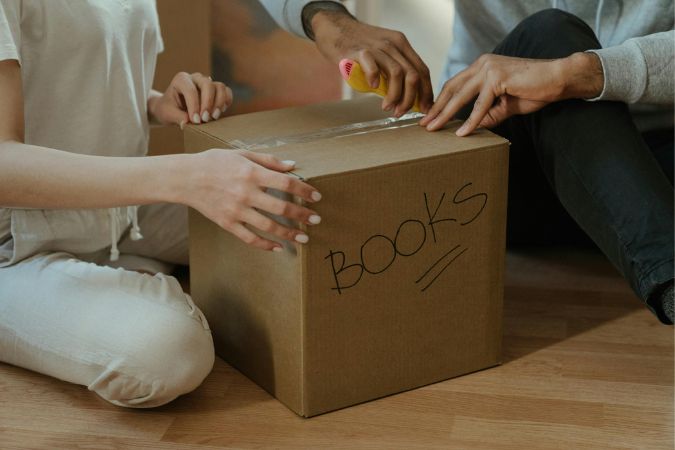 Book-packing 101: Use smaller boxes and limit your packing weight to about 35 to 40 pounds (or less) per box. Your body will thank you.
5. Choose the Right Size Box for Your Books
What's the best way to pack books when moving house, especially if you have a lot? The secret is to not fill large boxes with your entire library. Look, obviously a book or a magazine on its own may seem light, but when you start filling boxes with dozens of volumes, it gets surprisingly heavy, right? So when you’re considering the question, “How do you move with a lot of books?” remember this: To pack boxes without making them too heavy, use smaller boxes and limit your packing weight to about 35 to 40 pounds (or less). You should take extra care, especially if you’re moving by yourself.
Believe it or not, carrying ten lighter boxes is actually easier (and safer) than carrying five heavy ones, especially if you’re going up and down stairs. You can source tons of free boxes of all sizes to make the process cheaper!
You can also consider spacing out your book collection amongst your other lighter-weight items (namely, clothing and linens), instead of piling them all together into one or two book boxes. Using books as “fillers” in the small gaps of other boxes is the expert method for how to pack books for moving because you utilize space more efficiently and will also distribute weight more evenly.

When figuring out how to pack books for moving a large collection, packing shelf by shelf makes unpacking at your new home much easier.
6. Make Unpacking Easier by Streamlining Your Packing Process
Wondering, “How do I move a large amount of books?” Packing books for moving when you have an insanely large book collection isn’t too different, but there are a few things you can do to make the process easier.
Pack Your Boxes Based on Your Shelves
If your collection is well organized or spans several bookshelves throughout your home, pack the books with their shelf buddies to make unpacking simpler.
Fall in Love With Labeling
Include the location where you plan to unload it (study, office, bedroom, etc.) on the label so you know where to take the box when you arrive at your new home. Use a marker or a QR code label printer if you’re feeling fancy.
Get Some Wheels for Easy Transport
And finally, consider renting a dolly, so you can transport multiple small-book boxes at once. If you have extra suitcases lying around, you can also consider packing some books in them to wheel to their new home!
| Pro Tip: Already know how to pack books for moving? That’s step one. But step two is giving yourself enough time to actually do the packing. Packing books for moving can take a while, especially when you have a large collection. Give yourself ample time with PODS moving services, delivered right to your driveway. Pack and load on your own schedule, use expert advice and avoid storage mistakes, then PODS will pick it up and deliver it to your new home, where you can unload and unpack bit by bit (and avoid filling your hallways with boxes). Moving with PODS is flexible, so you can keep your container as long as you need to properly organize and display your coveted collection. |
Wrapping Up: Follow These Dos and Don’ts of the Best Way To Pack Books for Moving
The best way to pack books when moving is to avoid overly-heavy boxes, protect your books from damage, and keep them organized for when it’s time to unpack. If you need handy reminders on everything you’ve learned, it’s all right here.
Top Tips for How to Pack Books for Moving
Here is every tip and trick for how to move books like you were born to do it:
- Packing most books upright: This method applies to all small- or medium-sized books, paperback or hardback.
- Laying specific books flat: You can use this method for oversized books such as photo albums, scrapbooks, coffee table books, yearbooks, etc. (limit four books to a box).
- Optionally wrapping books with acid-free tissue: This isn’t a must-do, but if you have books that are older, bound in leather, or just extra special to you, then it’s a good idea. The tissue should be wrapped in a way that prevents the book covers from touching each other. Secure the tissue with paper tape.
- Moving books during agreeable weather: The last thing you want is for your box of precious books to get wet right before you store it in your moving container.
- Adding a protective layer of paper or cloth: If you decide to pack your books in a plastic bin, you’re going to want something between the books and the sides of the container. Sudden temperature changes can cause condensation in these containers, and that could damage your books.
- Placing like with like: It might sound cheesy, but some books are simply going to fit more nicely together than others — focus on placing similar books together.
Typical Mistakes To Avoid When Packing Books
What are common mistakes when packing books? They include:
- Packing with spines facing down: This is the worst way to pack books, as it can cause your volumes to warp under their own weight, plus the bindings will eventually become damaged.
- Packing with spines facing the sky: This is the worst way to pack books, as it can cause your volumes to warp under their own weight, plus the bindings will eventually become damaged.
- Fitting too much in one box: Books that are pressing too tightly against each other can become warped or damaged.
- Leaving too much wiggle room: Use bubble cushioning roll, tissue paper, or even stuffed animals to prevent the books from shifting inside the boxes and hitting against one another.
- Packing more than you can carry: Someone’s going to have to lift that box, so be sure it’s not packed too heavily by keeping the weight below 40 lbs.
- Stacking heavy boxes on light boxes: This is self-explanatory, but heavier boxes can crush lighter boxes and damage their contents.
- Causing stress by trying to be perfect: It’s best to keep things organized, but if you can’t fit certain books together, it’s best to grab another box and move on to the next thing.
- DON’T stress over perfection: It’s best to keep things organized, but if you can’t fit certain books together, it’s best to grab another box and move on to the next thing.

Knowing your books are being moved safely and efficiently will give you that sense of relief.
Make Moving Flexible With PODS
Moving from one home to another can be an exciting and adventurous time. It can also lead to some added anxiety and stress for the book lover who wants to shift everything responsibly and find the best way to pack books. Safeguard all the stories you cherish (and that massive TBR) with a portable moving container from PODS. Need help with the heavy lifting? PODS can refer you to local packing and loading assistance. The best part of knowing how to pack books for moving? You can then focus on more important things — like the excitement of figuring out your next favorite reading nook in your new home.
If you need some extra help along the way, though, the PODS Blog has you covered. Check out our collection of packing tips and hacks to get started on your stress-free move. Visit PODS online for a free local moving quote or call 877-350-7637 for long-distance moving.
(Source for feature image at the top: Blue Bird via Pexels)
Kiran Bahl is a freelance writer who loves discovering how to make something better yet simpler at the same time. She lives happily and peacefully amongst her family and enjoys dessert every day — especially after meeting a writing deadline early.
*This article was written on behalf of PODS Enterprises, LLC (“PODS”). PODS does not warrant the completeness or accuracy of any information contained in this article and disclaims any liability for reliance upon the content herein.

Your quote in 60 seconds
Get pricing tailored to your needs!
Related Articles

How to Wrap Furniture for Moving: A Step-by-Step Guide To Help You Move Like a Pro
Packing Tips and Hacks
Read more

What To Pack First When Moving: The Only Moving Packing List You Need
Packing Tips and Hacks
Read more


How To Pack for a Move: 16 Foolproof Packing and Moving Tips From a Seasoned Pro
Packing Tips and Hacks
Read more