The Complete Moving Timeline: A Week-by-Week Guide to Moving Day
Moving Tips and Hacks

Wondering how to create a timeline for moving? Moving — whether local or long-distance — is stressful enough. Between packing, planning, and trying to keep track of a million little details, it’s easy for things to get overwhelming fast. That’s why having a complete moving timeline is such a game-changer. It helps break the process into manageable steps so you can stay focused, organized, and a whole lot less stressed as moving day gets closer. Let’s take a closer look at the ultimate moving timeline checklist.
Q: What is a moving timeline? A: A moving timeline is a week-by-week checklist that organizes every task — from hiring movers to packing the last box — so nothing gets missed before, during, or after your move. |
What Is a Moving Timeline (and Why Do You Need One)?
Moving timelines are one of the best ways to keep yourself organized in the weeks before your move. Without them, you’ll find it’s easy to forget something or to go over your intended budget. The payoff to using a moving timeline checklist is that you don’t have to worry about an important task getting lost in the shuffle. It greatly reduces the stress of moving, and you’re more likely to reap the cost-saving rewards from planning ahead.
Keep in mind that moving timelines may differ between local and long-distance moves. Long-distance moves may require you to start planning eight to 12 weeks before you move, but that all depends on your specific situation.
Complete Moving Timeline: 8 Weeks Out to Moving Day
Your packing timeline for moving includes everything from researching movers, decluttering, packing, confirming logistics, and doing your final walkthrough.
| Timeframe | Priority Tasks |
|---|---|
| 8 Weeks Out | Research movers, reserve PODS container, set budget |
| 6 Weeks Out | Declutter, source packing supplies, begin non-essentials |
| 4 Weeks Out | Confirm reservations, notify utilities, pack room by room |
| 2 Weeks Out | Deep-pack, update address, tackle hardest rooms |
| 1 Week Out | Pack essentials bag, confirm all logistics, disassemble furniture |
| Moving Day | Final walkthrough, load, hand off keys |
8 Weeks Out
- Start researching to decide whether you’d like to hire movers, rent a moving truck, or rent a PODS storage container.
- Create a moving folder to track receipts and important documents, so they’re all in one easy-to-access place.
- Set a budget for your entire move, which includes movers, truck rental, storage, packing materials, and a contingency fund.
- Go through each room and declutter items you no longer need or want. After you’ve decluttered, create separate boxes for selling, donating, and throwing away.
6 Weeks Out
- Start to source boxes, packing tape, and cushioning for fragile items.
- If applicable, give notice to your landlord and arrange school records transfers.
- Plan time off from work for the move.
- If your move is long-distance, now is a great time to have your car checked out and the oil changed.
4 Weeks Out
- Submit a change of address to forward your mail.
- Transfer utilities (such as gas, electric, water, sewage) to your new address.
- Update your banking information and credit cards with your new address.
- Decide what to pack first, such as out-of-season clothing and decorative pieces.
- Label each box with the room it should go in, as well as an inventory of the contents.
- Confirm the logistics of your move (contact movers, double-check your rental truck reservation, or schedule the drop-off for your PODS storage container).
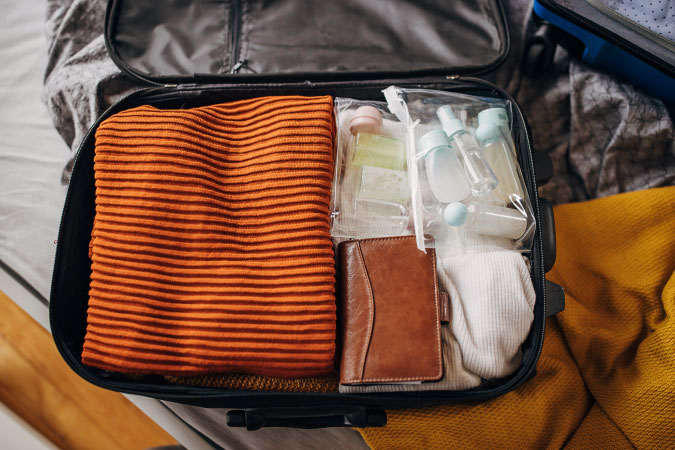
Pack a moving essentials bag to keep everything you’ll need during and immediately after your move organized and accessible.
2 Weeks Out
- Pack an essentials bag with clothing, toiletries, important documents, and medications.
- Start the packing process with the hardest room first (see below), and then branch out to other rooms.
- If applicable, arrange for pet or child care during moving day.
- Dispose of flammables that movers will not take.
1 Week Out
- Clean your old home and prepare for moving day.
- Defrost the refrigerator and disassemble furniture.
- Finish up packing.
Moving Day
- Take inventory of each room, and if you’re using movers, inspect the truck to ensure everything has been loaded properly.
- Do a final walkthrough to ensure nothing has been left behind.
- Hand off the keys to your landlord or leave them in a visible place for the new owners.
| PODS Tip: Reserve your PODS container at the 8-week mark — especially for summer moves. Containers fill fast, and early booking locks in your preferred delivery date. |
The Hardest Room To Pack — and How To Tackle It First
The kitchen is widely considered the hardest room to pack, for a few reasons — mainly fragile dishware and oddly shaped appliances. Learning how to pack glasses, plates, stemware, and those precious serving platters you only put out once a year can save you from unpacking broken dishes later on. It’s also important to learn about packing heavy pots, pans, bowls, and utensils, not to mention awkward and heavy appliances like air fryers, stand mixers, and blenders.
The best place to start? Declutter your junk drawers, empty out old food containers, and prioritize eating all the food in your pantry. And write down when you’re going to do it all on your moving timeline (Hint: Decluttering and packing up non-essentials can happen two to three weeks before moving day). Even better, if you’re using a PODS storage container, you can load these boxes up as you fill them!

Unreliable or inexperienced movers will only make your move more stressful.
Red Flags To Watch For When Hiring Movers
What are red flags to watch for in movers? When you’re deciding between the best long-distance moving companies, it’s important to also be aware of some potential red flags, like the following:
- The mover doesn’t visit your home or ask for a complete list of items before offering a quote. You’re likely to get a low quote off the bat, only to start racking up extra charges during the move.
- You don’t receive that estimate in writing.
- The movers won’t provide their licensing or insurance information, including what is and isn’t covered during your move.
- The business doesn’t have a physical address.
- The company has no reviews on reputable sites like the Better Business Bureau (BBB) or even Google.
Tips To Stay on Your Moving Timeline
When should you start planning your move? The most complete moving timeline will give you at least eight weeks to pack up your belongings, but there are a few things you can do to give yourself wiggle room. Add a few buffer days in case you encounter delays, and start setting non-essentials aside earlier than you might think necessary. You can stay on your timeline by including a few buffer days in case you encounter delays. Don’t forget to print out your moving timeline or use a checklist app so you can easily follow it.
| PODS Tip: PODS offers flexible pickup scheduling, so if you find you’re ahead of schedule, you can always have your portable storage container picked up and securely stored. |
Complete Moving Timeline — FAQs
Q: How far in advance should I start a moving timeline?
A: Most moving timelines start around two months, or eight weeks, before moving day. Long-distance moves may start up to 12 weeks out if there are complicated logistics.
Q: What is the hardest room to pack when moving?
A: The kitchen is considered the hardest room to pack, although home offices, bathrooms, and garages are also complicated.
Q: What should I pack last when moving?
A: Your essentials bag with clothing, important documents, toiletries, and medication should be the last thing you pack. Also, any essential cleaning supplies or things like bed sheets and a shower curtain that’ll help you stay comfortable on night one.
Q: How long does it take to pack a house?
A: It generally takes between 20 and 50 hours to pack a house.

With one month’s storage built into the cost of every PODS move, you can take the time you need without feeling rushed.
How PODS Can Help With Your Moving Timeline
Once you have your complete moving timeline in hand and boxes at the ready, there’s only more thing to do — move everything. Make your move to a new home flexible with PODS portable moving containers. One month’s storage is included in the cost of every move, so you can make the move on your own timeline without feeling rushed. Need help with the heavy lifting along the way? PODS can refer you to local packing and loading assistance.
Visit PODS online for a free local moving quote or call 877-350-7637 for long-distance moving.
*This article was written on behalf of PODS Enterprises, LLC (“PODS”). PODS does not warrant the completeness or accuracy of any information contained in this article and disclaims any liability for reliance upon the content herein.

Your quote in 60 seconds
Get pricing tailored to your needs!
Related Articles



What is a Moving Loan? Your Essential Guide to the What, When, Why, and How to Use a Loan for Your Next Move
Moving Tips and Hacks
Read more
Moving While Working Remotely? 5 Tips To Make It Easier & 5 Hotspots Remote Employees Are Moving to in 2026
Moving Tips and Hacks
Read more
Moving Out For the First Time Checklist: A Step-by-Step Guide To Leaving Home
Moving Tips and Hacks
Read more