How to Pack Fragile Items For Moving Like a Pro: The Comprehensive Guide
Packing Tips and Hacks
TL;DR: How To Pack Fragile Items for Moving Fragile items need more than a box and some paper — they need the right materials, strategic cushioning, and smart packing order. Use double-wall boxes for extra protection, ink-free packing paper to avoid stains, and honeycomb packing paper as an eco-friendly alternative to bubble wrap. Pack glassware upright and dishes vertically (never stacked flat) to prevent cracks, and give mirrors and artwork their own reinforced boxes with taped corners. Finish with a shake test before loading fragile boxes last, on top, and away from heavy vibration. |
Moving to a new home is one of life’s most stressful transitions, especially when it comes to packing up all of your belongings. We hope you’ve never experienced the sinking feeling that comes with opening up a box only to find a jumble of cracked glass, but accidents happen. That’s why learning how to pack fragile items for moving isn’t just a matter of convenience — it’s a crucial part of preserving your beloved items.
The truth is that moving trucks aren’t exactly gentle, and between the potholes and sudden stops, all your belongings are in for a bumpy journey. But fear not, our guide will delve into the best packing tips and hacks for your fragile items.
Establishing the Foundation
For your most precious cargo, you’ll want to invest in double-wall boxes. Standard moving boxes are usually made from single-wall cardboard, and they’re a lot easier to bend or damage. These heavy-duty boxes will provide a better buffer against side impacts. (They’re especially helpful when you’re figuring out how to pack dishes for moving.)
Figure Out Your Packing Zone
Packing is more than just boxes — you have to set the scene. Packing on a cluttered floor is a great way to lose your scissors, or worse, step on them. Instead, set up your packing station on a sturdy surface, like the dining room table. You could even spread a moving blanket out to protect the table top and provide a soft landing pad for your items.
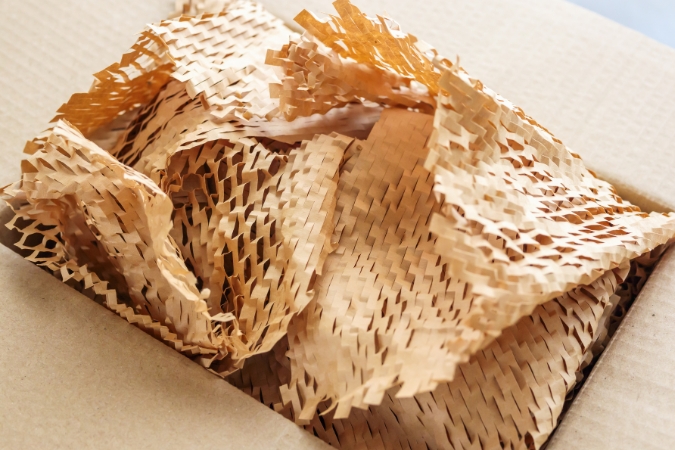
Trying to stay eco-friendly? Honeycomb packing paper is one of the best packing materials for fragile items.
Maximum Protection: The Science of Cushioning
Successfully packing fragile items for moving isn’t just covering things up; you have to ensure your belongings can handle bumps along the journey. Using the best packing materials for fragile items correctly means strategic layering to absorb impact when it happens.
Ink-Free Paper
While you might be tempted to use old newspapers, ink-free packing paper is the way to go for your most fragile possessions. While rare, standard newspapers can stain your possessions with ink and even leave stains.
Bubble Cushioning Roll Alternative
Many people look for what to use instead of bubble cushioning roll to be more eco-friendly and save more box space. Honeycomb packing paper is a great way to do exactly that. It expands into a 3D hexagonal web that grips onto itself, so you don’t even need to tape to keep it secure!
The biggest thing to remember with fragile items: Instead of wrapping tight like a present, you should slightly crumple the paper as you wrap — this creates air pockets that act as shock absorption.
How to Pack Glassware for Moving: The Professional Techniques
Because of its hollow structure and various densities, glassware is often the most vulnerable during a move. You need to address both internal and external stressors when learning how to pack glassware for moving so you don’t move into your new home with half sets of all your dishes.
Preparing the Container
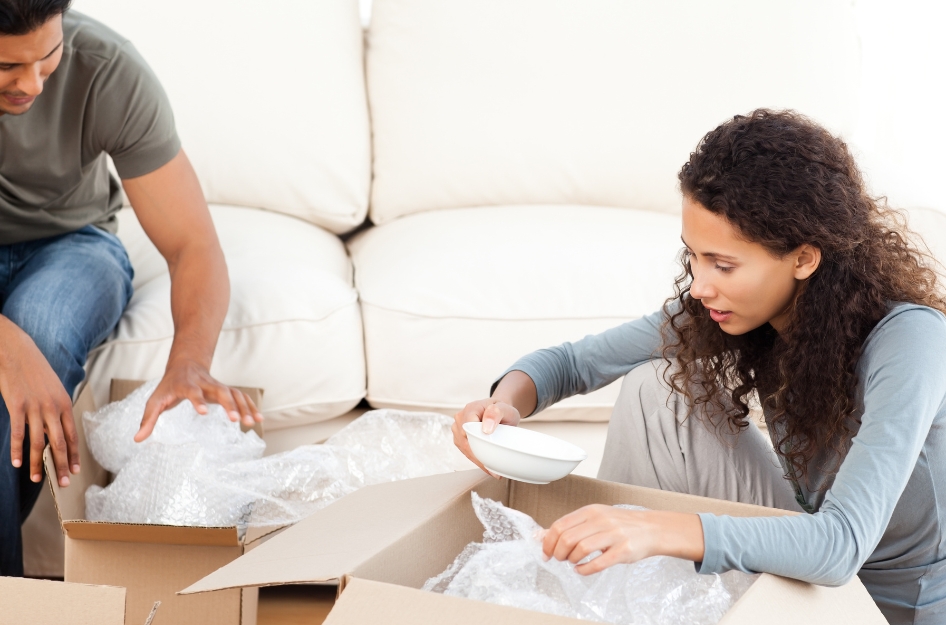
First step: Grab your box. Then, using crumpled packing paper, bubble cushioning roll, or honeycomb packing paper, crumple enough to create a layer at the bottom of the box to absorb shock.
Wrapping Drinking Glasses and Tumblers
Stuff a crumpled sheet of packing paper inside each glass. Then, set the glass in the corner of a large sheet of packing paper. Roll it diagonally and tuck the edges as you go until the glass is fully covered in multiple layers.
Pack glasses upright, never on their sides — glass on its side is far more likely to develop a stress fracture.
Stemware Requires Special Care
Stemmed glasses — wine glasses especially — need extra protection. Use a glass pack kit with individual cardboard cells to keep glasses from touching. Wrap each glass in packing paper first, then add an outer layer of bubble cushioning roll for maximum protection.
Shake Test
Give the packed box a light shake. Any clinking or shifting means it needs more paper.
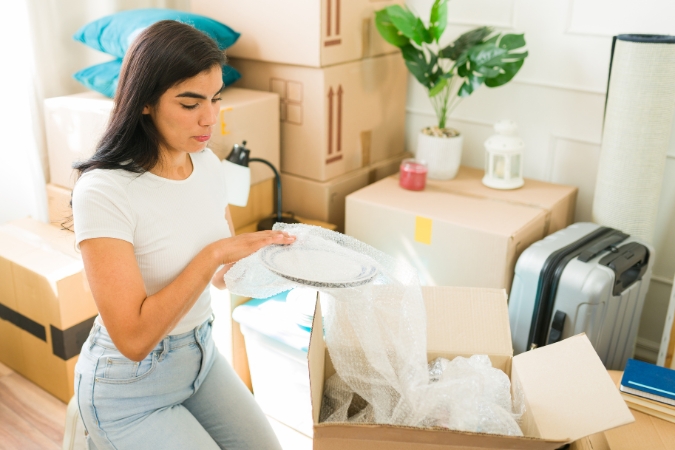
When packing fragile items for a move, don’t stack your dishes — treat them like records and pack them vertically for safer transport.
How to Pack Dishes for Moving: The Vertical Method
Kitchenware is one of the most repetitive yet critical parts of learning how to pack fragile items for moving. Instinct says to pack plates horizontally, the way they sit in a cabinet — but that's a major error in a moving truck. Horizontal stacking puts the full weight of the stack on the bottom plates, and any bump on the road can crack them.
The Vertical Technique
The standard for how to pack dishes for moving is to orient them vertically; think of your plates similarly to how vinyl records are positioned in a crate. Center each plate on a large sheet of packing paper and fold the corners over until it’s fully covered. For fine china, add a layer of bubble cushioning roll on top for extra protection.
Once each plate is wrapped, take a stack of three to four and wrap them together in a large bundle of packing paper or stretch wrap. Place the bundles into a heavy-duty box on their edges.
Bowls and Saucers
Because bowls are deeper, it’s hard for them to sit perfectly on their edges. After wrapping each one, nest them inside each other with a thick layer of honeycomb packing paper between layers.
Packing Flat Glass Items
Flat glass items, like mirrors and framed artwork, present a larger challenge when you’re learning how to pack fragile items for moving.
X Tape Technique
Before you start wrapping, use painter’s tape across the glass to create a large “X” from corner to corner. This might not prevent the glass from breaking, but it will at least keep shards in place and prevent you from getting cut.
Specialized Containers
Most standard boxes aren’t the correct dimensions for mirrors and art, which is where telescopic mirror boxes can help. They come with two interlocking pieces that slide together to create a rigid shell.
If you can’t find a box that fits, you’ll at least want to protect the frames. The corners of a frame are the most vulnerable point, so cardboard corner protectors should be slid onto each corner before placing the item in the box. To cushion the surface, use a moving blanket or honeycomb packing paper to provide a buffer between the glass and the cardboard.
Strategic Loading
The way each box is loaded onto the truck determines its survival. Even if a box is packed properly, it can still be crushed if it's placed under another heavy item.
- Load fragile boxes last: Load your fragile boxes last so they are not buried under any heavier items.
- Safe zones: Fragile items should be placed in protected areas, such as on top of appliances away from where the most road vibrations occur.
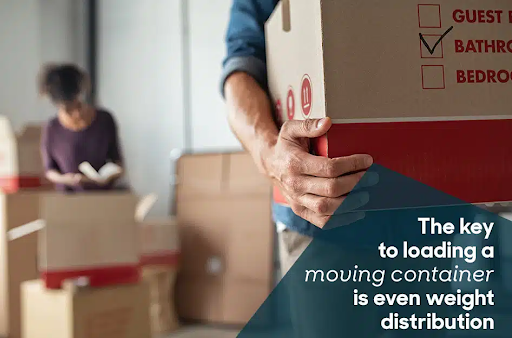
- Weight distribution: Always place heavy, sturdy boxes on the bottom and lighter, fragile boxes on the top. Make sure to include large fragile stickers.
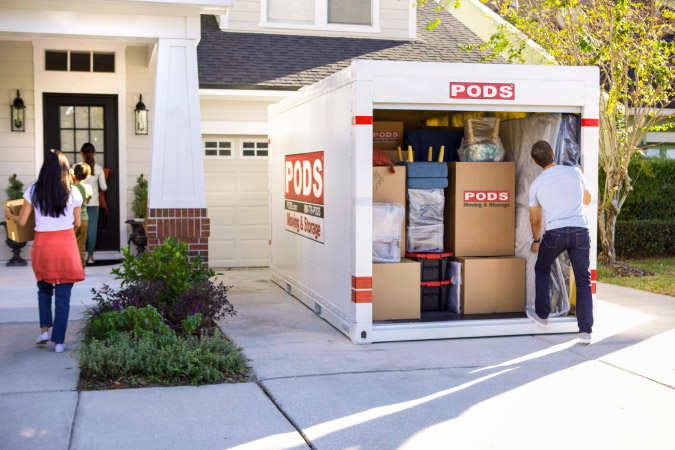
Once you’ve mastered how to pack fragile items for moving, have a PODS portable container delivered right to your driveway for convenient loading and unloading.
How to Pack Fragile Items for Moving — FAQs
Q: What to wrap fragile items in when moving?
A: To wrap fragile items securely for a move, you will need a combination of professional supplies such as ink-free packing paper, bubble cushioning roll, honeycomb packing paper, and moving blankets.
Q: What is the hardest room to pack when moving?
A: The kitchen is often considered the hardest room because of its high concentration of fragile items.
Q: How to pack fragile items in a moving box?
A: In order to properly pack fragile items, you must use a sturdy box, create cushions, layer strategically, fill gaps, and label with fragile stickers.
Make the Move to Your New Home Flexible With PODS
Make the move to your new home flexible with PODS portable moving containers. Have a container delivered right to your driveway where you can load it on your own schedule. If you need help with heavy lifting, PODS can connect you with local packing and loading assistance. Once you’re ready, have your container picked up and delivered to your new home, or kept in a PODS Storage Center until you’re ready for it.
Visit PODS online for a free local moving quote or call 877-350-7637 for long-distance moving.
*This article was written on behalf of PODS Enterprises, LLC (“PODS”). PODS does not warrant the completeness or accuracy of any information contained in this article and disclaims any liability for reliance upon the content herein.

Your quote in 60 seconds
Get pricing tailored to your needs!
Related Articles

How to Wrap Furniture for Moving: A Step-by-Step Guide To Help You Move Like a Pro
Packing Tips and Hacks
Read more

What To Pack First When Moving: The Only Moving Packing List You Need
Packing Tips and Hacks
Read more
How To Pack for a Move: 16 Foolproof Packing and Moving Tips From a Seasoned Pro
Packing Tips and Hacks
Read more