Moving Out For the First Time Checklist: A Step-by-Step Guide To Leaving Home
Moving Tips and Hacks

Moving out for the first time is an experience you’ll remember forever. Perhaps you’re moving for college or relocating for a job — or maybe you’re taking that next step in your relationship and moving in together. Whatever the circumstances, moving out for the first time is a pivotal moment in your life that requires thought and preparation. To help you navigate these uncharted waters and confidently sail out on your own, consider these practical tips in our guide to moving out for the first time.
Moving Out For the First Time Checklist
Like any big project, your first-time move on your own will feel a lot less overwhelming if you break it down into a step-by-step plan. Use our moving out for the first time checklist to help you stay organized before, during, and — perhaps most importantly! — after your move.
1. Make Sure You’re Financially Prepared
There’s nothing like getting out on your own for the first time and having to call home for help with the rent. Here are a couple of ways to make sure that doesn’t happen.
Build a Monthly Budget
There are plenty of budget planners online to help you work out the numbers when you’re moving out for the first time — even if math isn’t your thing. We recommend two financial formulas for any first-time mover:
- Your income should be about three times your housing cost. So, to comfortably afford $1,000 a month for rent, you need to bring home at least $3,000 a month.
- Budget according to the 50/30/20 rule: 50 percent of your income should go toward things you need (housing, utilities, food, transportation, etc.); 30 percent toward things you want (travel, entertainment); and 20 percent toward savings or paying down debt.
Plan for Up-Front Moving Costs
It’s an unfortunate fact that your expenses will start even before you sign an apartment lease. From moving boxes and packing supplies to hiring help or renting a truck, moving costs add up. Establish a “moving day reserve” on the side to mitigate the potential sticker shock.
You’ll also need to pay a variety of fees that are waiting at the other end of the move. A deposit on an apartment or certain utility services is common if you’re a first-time mover and you don’t have an established credit history. Plan wisely.

A “moving day reserve” is a good way to prep for the costs that come with moving out for the first time.
2. Weigh the Pros and Cons of Living Alone vs. Living With a Roommate
Housing is generally the biggest consideration when it comes to moving out for the first time. Given that, deciding whether you can swing it on your own — or if you even want to — should be one of the first items to address on your moving checklist.
Living Alone
Independence and privacy obviously are perks of living on your own. But those perks can come at a price. Shouldering 100 percent of rent and all household expenses isn’t possible for everyone. But if having someone else around all the time isn’t your cup of tea and you can afford it, going solo makes sense.
Living With a Roommate
The many pros of living with a roommate include sharing expenses, furniture, and household items, along with a built-in social connection — as long as you like the person who lives with you. But even if you’re super close friends, it’s still a good idea to discuss details before making a commitment. How will you split the bills? What kind of cleaning cadence will work for both of you? And what about overnight guests? Hammering these matters out in advance may help prevent misunderstandings — or worse — once you’re locked into a shared lease.

Feeling homesick is completely normal when you’re moving out for the first time, but there are ways to overcome those twinges.
3. Choose the Right Location
When you’re moving out for the first time and looking for a place to live, there are two main things to consider: affordability and convenience.
- What’s the overall cost of living?
- Will you feel safe walking in the neighborhood — or just outside to your car, for that matter?
- How long is your commute to work/school?
- Are there grocery stores, pharmacies, and other essentials within easy reach?
4. Set Up Utilities and Other Important Services
It’s a good idea to get these things up and running before moving day. Who wants to be without internet — or worse, electricity! — on day one? The typical utilities to turn on include:
- Electricity
- Gas
- Internet/cable
- Water and sewer
- Trash collection
Renters insurance is another important consideration to add to your moving out for the first time checklist. In fact, most apartment managers require a policy — just in case. But even if yours doesn’t, you might want to check it out anyway. Many car insurers can add the renters’ premium to the bill you already pay, and in most cases, it’s super affordable.
5. Update Important Documents and Addresses
Even if you’re just moving across town, you’ll want to make sure you don’t miss any important mail. And some costs — car insurance, for example — can vary by zip code, so making the official change is important.
Change of Address
You can do this online or in person at your local post office. Also, make sure to submit an updated address to companies you do business with: Banks and credit cards, insurance carriers, and your employer. And don’t forget Amazon and DoorDash unless you want to gift your next delivery to the new resident of your old apartment.
Car Registration and Driver License
Deadlines vary from state to state (California gives you 10 days, Florida 30, Alaska 90, for instance), but it’s smart not to procrastinate changing your car registration and driver's license to your new home. You can be fined or have your license suspended. Make an appointment, gather the documents you need, and get it done.
Voter Registration
A new address means a new voting precinct. Go to vote.gov to update your info — there’s no excuse not to miss the next election!
6. Gather Your New Home Basics
When you’re planning things needed for moving out for the first time, focus on the essentials. If budgets are tight, you might try to adopt some gently used items from your family and friends. Shop around thrift stores and online marketplaces to find some of the essentials for moving out for the first time. And remember: You don’t need to outfit your place with all the latest tech tools on day one; you’ll have plenty of time to add new goodies. For now, think about non-negotiables:
For the Kitchen
Consider your needs for the first few days, in particular, when you’ll likely be eating simple meals or even takeout while you’re busy unpacking and getting organized. For now, your essentials are plates, coffee mugs, glasses, utensils, pots and pans, cutting board, pot holders, dish towels, can opener, blender, toaster, trash can, and the all-important coffee maker. Maybe add a kettle if it’s cold out. (Trust us, easy access to warm water for teas and hot chocolate when you’re coming in and out is a huge relief.)
For the Bedroom
A well-stocked, comfy bedroom needs a mattress and box springs (or not, if you have a platform bed), pillows, sheets and blankets, a nightstand, drawers, a laundry hamper, and a lamp.
For the Bathroom
These are the most essential of essentials: Toilet paper, soap, shampoo and conditioner, plunger, towels, bathmat, shower curtain (and rod if needed), tissues, toothbrush, floss, and toothpaste. And don’t forget sunscreen — especially if you’re moving to a different climate.
For the Living Room
Tchotchkes and knick-knacks can come later — what you need now is a couch, coffee table, and a TV. And curtains or blinds, if the new neighbors seem nosy. Area rugs are a good idea if you have tile or wood floors. Don’t forget a bed for your pet! And their toys so all that new furniture survives night one.
Cleaning Supplies
You may be moving out for the first time, but you still need to keep things clean and tidy. For starters, you’ll need a vacuum, broom/mop, dustpan, trash bags, laundry detergent and dryer sheets, multipurpose wipes, glass cleaner, paper towels, dish soap, and sponges.
Essential Tools and Emergency Supplies
- Every home needs to have a basic toolkit on hand: Hammer, nails, picture-hanging kit, level, tape measure, screw drivers (flathead and Phillips), drill, pliers, extension cords, and batteries (various sizes).
- Accidents can happen. Some pharmacies sell fully stocked first-aid kits you can stash in the bathroom closet. If you’d prefer to DIY, make sure you cover the basics: Bandages, antiseptic ointment, ice pack, thermometer, pain reliever, tweezers, and hydrogen peroxide.
- In case of a no-electricity variety of emergency, a flashlight (or two), candles, and a lighter will come in handy.
7. Start Packing
No matter how much time you think you have, starting to pack as soon as possible is always a good idea. And being organized about it is even more important. Some things you’ll need:
- Boxes
- Packing tape
- Bubble cushioning roll
- Packing paper
- Labels
- Permanent markers
A few tips from the pros for moving out for the first time: Label every box clearly so you (or your movers) will know where each box needs to land in the new house. Declutter before moving — even before you start packing. And don’t be nervous about asking for help. Review your packing and moving tips, turn up the music, and start packing.
8. Prep for Moving Day
When you’re about 48 hours from go time, run through your moving checklist to make sure everything’s covered to keep your first-time move on schedule. You’ll want to:
- Confirm your movers or help.
- Pack a “day one” bag to keep with you so you have essentials like toiletries, medication, chargers, and a change of clothes.
- Make sure you keep important documents with you (birth certificates, Social Security cards, etc.).
- Pack snacks and water for the day.
9. Make Your New Place Feel Like Home
Get Comfy in Your Space
After everything’s unpacked and you’re mostly moved in, take some extra time to make your apartment or house a real home. Some things you can do:
- Decorate with photos of family and friends.
- Add cozy comfort items — a nice lamp, favorite blankets, scented candles, plants.
- Cook some of your favorite recipes.
- Build new routines — morning walk around the block, afternoon visit to the coffee shop, evening trip to the nearest grocery store.
Make New Friends
There may be some homesick hiccups — completely normal and to be expected. After all, the “first time” part of moving out for the first time may take some getting used to. Need some ideas for making new connections?
- Join a local club or hobby group — find like-minded social groups, crafters if you’re crafty, runners, scuba divers, or whatever you want to try!
- Volunteer for a food bank or arts organization
- Get outside! A welcoming “hello” to a neighbor may spark a new friendship
But Stay Close to Family and Old Friends
Enjoying your new life doesn’t mean shedding old friends and family. Once you’re moved and settled, stay in touch with loved ones (and mitigate the occasional bout of homesickness) with phone calls, FaceTime, and visits. Cherish your memories, consider your first time moving out as an adventure, and keep looking forward.
Moving Out For the First Time — FAQs
Q: Is moving out for the first time hard?
A: Everyone’s experience is a little different when it comes to leaving home for the first time. Some people fly away without looking back, but others may need a gentle nudge — and then have bouts of homesickness. The good news is that most of those painful pangs for familiar faces ease with time. And more good news: Investing in planning and preparation for your move reduces your stress level, which makes it easier to make that first solo flight.
Q: Is $5,000 enough to move out?
A: Yes, $5,000 can be enough for moving out for the first time. But of course, it depends on your specific circumstances. Your up-front costs will generally include the first month’s rent, security deposit, utility deposits, moving supplies, and furniture basics for your new home. It’s a good idea to have an “emergency fund” in place before you make your first move, so keep that in mind when you’re adding up your costs.
Q: What is the first thing to do when moving out?
A: Make a budget. Everything will flow from this step — where you live, most importantly. Having a realistic idea of what you can afford will make moving out for the first time a much more pleasant process.
Q: What is the perfect age to move out?
A: Again, this depends on your needs, your family situation, and your budget. Some people stay home well into their late 20s if they’re in grad school, for instance. And some 18-year-olds fly the coop and never look back.
Q: What are the steps to moving out for the first time?
A: How do you move the first time? Here’s an abbreviated checklist for moving. For a detailed version, check out the PODS Moving Checklist.
- Make a budget.
- Pick your location.
- Research moving companies based on your budget.
- Buy the basics for your new place.
- Get packing and moving supplies.
- Get to work!
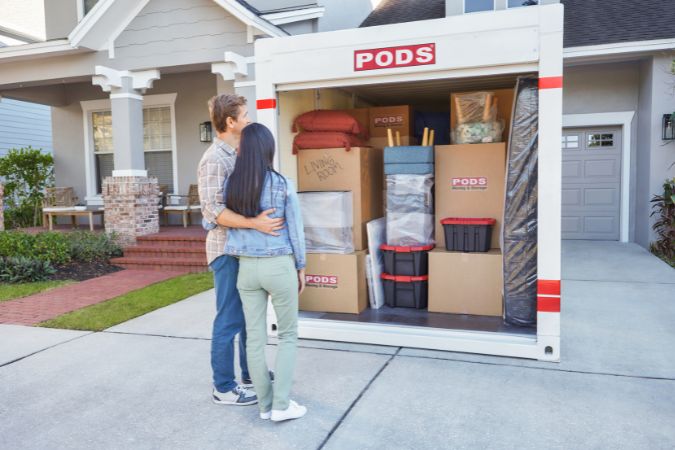
Our guide to moving out for the first time will help ease the transition for first-time movers.
Make Your First-Time Move Flexible With PODS
Now that you’re equipped with our guide to moving out for the first time — let’s go! Whether you’re heading to school or a new job, exploring being on your own, or taking your relationship to the next step and moving in together, it can all definitely feel overwhelming. But with the right support and planning, these tips for moving out for the first time will help you feel more confident and ready to leave the nest.
And for your first-time move, flexibility is key. Make your move with PODS portable moving containers, delivered right to your driveway so you can pack and load at your convenience. If you need help with the heavy lifting, PODS can refer you to local packing and loading services to lend a hand. And if your new home isn’t quite ready for you to move in, don’t worry — one month’s storage is built into the cost of every move.
Visit PODS online for a free local moving quote or call 877-350-7637 for long-distance moving.
Kiran Bahl is a freelance writer who loves discovering how to make something better yet simpler at the same time. She lives happily and peacefully amongst her family and enjoys dessert every day — especially after meeting a writing deadline early.
*This article was written on behalf of PODS Enterprises, LLC (“PODS”). PODS does not warrant the completeness or accuracy of any information contained in this article and disclaims any liability for reliance upon the content herein.

Your quote in 60 seconds
Get pricing tailored to your needs!
Related Articles


What is a Moving Loan? Your Essential Guide to the What, When, Why, and How to Use a Loan for Your Next Move
Moving Tips and Hacks
Read more
Moving While Working Remotely? 5 Tips To Make It Easier & 5 Hotspots Remote Employees Are Moving to in 2026
Moving Tips and Hacks
Read more