
Is Living in St. George, Utah Right for You? 10 Things To Consider
Utah
TL;DR: Living in St. George, Utah
|
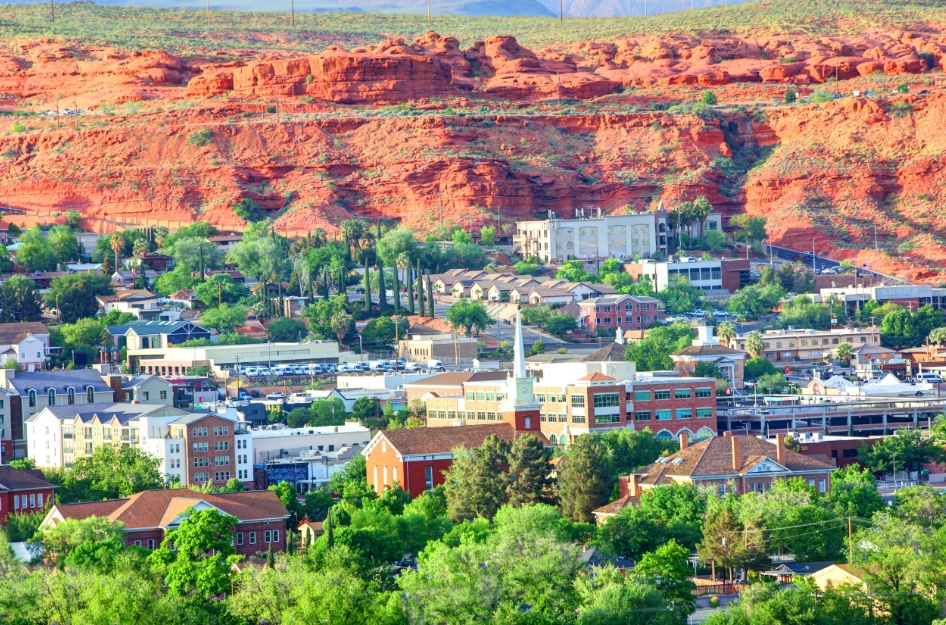
Surrounded by red-rock cliffs in the state’s sunny southwest corner, living in St. George, Utah, has plenty to offer — from easy access to hiking trails and golf courses to mild winters and a growing lineup of restaurants and shops. It’s no wonder the city has caught the attention of outdoor enthusiasts, retirees, remote workers, and families looking for a little more breathing room.
| Planning a move to St. George? Start by getting a free moving quote from PODS. |
Of course, living in St. George isn’t all sunshine and scenic views. Housing costs can be steep, and those famously mild winters come with some seriously hot summer days. If you’re thinking about making the move, here are 10 things to know before putting down roots in St. George.
St. George at a Glance
- Population: St. George has a population of just over 108,700.
- Median age: The median age is 37.2 years.
- City size: St. George covers roughly 78 square miles.
- Location: The city sits in Washington County near the Arizona border, about 120 miles northeast of Las Vegas and roughly 300 miles south of Salt Lake City.
- Fun fact: St. George was named for George A. Smith, an early leader in The Church of Jesus Christ of Latter-Day Saints. Not to be confused with the dragon-slaying saint!
10 Things To Know About Living in St. George, Utah
If you’re considering living in St. George, Utah, scenery may be what first catches your attention, but affordability, employment, transportation, and climate can shape daily life just as much as the view. Many people move here for warmer winters, access to nature, retirement, remote work, or a quieter alternative to a larger metro. This list covers those benefits — and some of the tradeoffs.
1. The Cost of Living in St. George, Utah, Is Above the National Average
Living in St. George, Utah, costs more than the national norm, largely because of housing. BestPlaces gives the city a cost of living score of 109.9, making it nearly 10 percent more expensive than the U.S. average index of 100, but about four percent less expensive than Utah’s score of 114.2. For comparison, Salt Lake City scores 121.3, while Grand Junction, Colorado, scores 99.1.
According to MIT’s Living Wage Calculator, basic expenses require an annual salary of about $52,000 before taxes for one adult living alone, $68,300 annually before taxes for two working adults without children, and $119,500 annually before taxes for two working adults with two children.

Exploring and hiking Snow Canyon State Park is one of the many things to do in St. George, Utah.
2. There Are Both Pros and Cons to Living in St. George, Utah
So, is St. George, Utah, a good place to live? For people who value sunshine, recreation, and small-city convenience, the answer may be yes. Still, living in St. George, Utah, means accepting a few desert-sized drawbacks.
Pros of Living in St. George, Utah
- Mild winters and abundant sunshine
- Easy access to hiking, biking, golf, and national parks
- Lower crime levels than the national average
- A relaxed pace with expanding city amenities
Cons of Living in St. George, Utah
- Triple-digit summer heat
- Housing costs above the national norm
- Limited public transit and a car-dependent layout
- Rapid growth, construction, and increasing traffic
3. St. George’s Housing and Rental Markets Can Test Your Budget
Buyers can choose from Southwestern-style homes, condos, townhouses, golf communities, and new master-planned developments. However, inexpensive options can be hard to find. As of July 2026, St. George’s average home value sits at $517,700, down slightly, just 0.8 percent, from the previous year.
Renting does not necessarily offer a bargain, either. RentCafe’s St. George listings show that asking prices vary considerably by apartment size, location, age, and amenities. Before choosing a home, consider summer cooling costs, HOA fees, commute time, and whether the property’s landscaping and outdoor areas suit a dry climate.
4. The Best Neighborhoods in St. George Suit Different Lifestyles
The best neighborhoods in St. George depend less on a universal ranking and more on the setting and amenities you want. These three areas are useful starting points:
- Little Valley: Families may appreciate newer homes, parks, trails, and sports facilities.
- Downtown St. George: Singles, young adults, and professionals can stay closer to restaurants, events, and enjoy the walkable historic core.
- SunRiver: Retirees interested in an active-adult setting can find golf, clubs, recreation facilities, and a social calendar in this 55-plus community.
5. St. George’s Crime Rate Is Lower Than the National Average
AreaVibes reports that St. George’s total crime rate is 43 percent below the national average. Violent crime is relatively uncommon, and available data also puts property crime below national levels. That broad comparison can be reassuring, but a citywide number never tells you everything about a particular address.
Crime patterns can differ between downtown blocks, busy commercial corridors, established subdivisions, and newer developments on the city’s edges. Researching each neighborhood individually can give you a clearer picture of what to expect.
6. Things To Do in St. George, Utah, Go Far Beyond Golf
The landscape is the headline attraction, but the area also mixes history, theater, and family-friendly recreation. A few local favorites include:
- Snow Canyon State Park: Explore more than 38 miles of hiking trails among sandstone cliffs, lava flows, dunes, and desert-tortoise habitat.
- Tuacahn Center for the Arts: Watch Broadway shows and attend concerts in an outdoor amphitheater framed by red canyon walls.
- Red Cliffs National Conservation Area: Hike, camp, climb, or mountain bike through protected Mojave Desert scenery.
- St. George Dinosaur Discovery Site: See preserved dinosaur tracks and learn how the animals moved through this area nearly 200 million years ago.

Lower wages could make living in St. George, Utah, challenging for some — even with the growing job market.
7. St. George’s Job Market Is Growing, but Pay Deserves a Closer Look
Healthcare, leisure and hospitality, construction, retail, education, and government all contribute to the local economy. Some of the area’s largest employers include St. George Regional Hospital, SkyWest Airlines, Washington County School District, and Utah Tech University. The metro unemployment rate was 3.8 percent in August 2026, suggesting a fairly active market.
Although St. George’s job market continues to grow, the city’s mean hourly wage of $26.89 is significantly lower than the national standard of $33.54. That’s a difference of over $12,000 a year for a full-time position. Of course, wages vary by industry. Comparing potential earnings with the area’s housing and your own living costs can help you determine whether working and living in St. George, Utah, makes sense for you.
8. Driving Is Still the Easiest Way To Get Around St. George
St. George is more compact than Salt Lake City, but it’s not especially walkable. The city’s walk score is 27, so most residents need a car to get around town. I-15 makes regional travel straightforward, although rapid growth has brought more congestion to major roads and interchanges.
The city’s transit system — known as SunTran — offers an alternative for some trips, but compared with Salt Lake City’s larger transit network, routes are limited.
9. St. George, Utah, Weather Brings Mild Winters and Intense Summers
St. George, Utah, weather is sunnier and warmer than what you’ll find in northern Utah. Winter afternoons commonly reach the 50s or low 60s, while spring and fall offer some of the best hiking weather. Snow is uncommon in the city proper, and if it does snow, it doesn’t usually last very long.
Compared with Salt Lake City and higher-elevation Grand Junction, winters are gentler, but summer heat is more intense. Summer is the catch: July’s average high is 102 degrees, and extreme days can be hotter.
10. St. George Can Offer Retirees an Active Desert Lifestyle
Warm winters, golf courses, healthcare access, and miles of nearby trails help explain St. George’s popularity among retirees. The area also offers a broad selection of 55+ communities, including the golf-centered SunRiver St. George, the gated Regency at Desert Color, and smaller low-maintenance developments like Vista del Sol and Vista Ridge Estates.
The area works especially well for retirees who want an outdoors-focused routine without the scale of Salt Lake City. Still, potential residents should weigh summer heat, rising housing costs, driving needs, and distance from family. Exploring nearby small towns in Utah can also help you compare St. George with quieter alternatives before committing.
Living in St. George, Utah — FAQs
Q: Is St. George, Utah, a good place to live in 2026?
A: It can be an excellent fit for people who value mild winters, beautiful scenery, outdoor recreation, and a smaller-city pace. The main tradeoffs are costly housing, extreme summer heat, growing traffic, and limited transit.
Q: What is the cost of living in St. George compared with other Utah cities?
A: St. George’s cost of living score sits at 109.9, or about 10 percent above the national average index of 100. That is below Salt Lake City’s score of 121.3 and slightly below Utah’s statewide score of 114.2, although individual housing and transportation costs will vary.
Q: How hot does it get in St. George in the summer?
A: July’s average daily high is about 102 degrees, but hotter days do occur. The dry air may feel less muggy (and easier to manage) than a humid climate, but careful timing for outdoor activity is essential.
Q: How is the job market in St. George?
A: The market has expanded alongside the population, with opportunities in healthcare, construction, education, retail, and more. Job seekers should compare wages with housing costs because some common local occupations pay less than Washington County’s estimated living wage.
Ready to start living in St. George, Utah? Make your move flexible with PODS moving and storage containers.
Make Your Move to St. George Flexible With PODS
Ready to start living in St. George, Utah? Make your move to St. George flexible with PODS portable moving containers. Have a container delivered right to your driveway, where you can load on your own time. Need help with the heavy lifting? PODS can connect you with local packing and loading assistance. When you’re ready, your container can be picked up and delivered to your new St. George home or kept in a secure PODS Storage Center until you need it. With one month of storage built into the cost of every move, you can take your time getting settled.
Visit PODS online for a free local moving quote or call 877-350-7637 for long-distance moving.
Editor’s note: For ease of reading, monthly rental prices were rounded to the nearest $25 and home values were rounded to the nearest $100.
*This article was written on behalf of PODS Enterprises, LLC (“PODS”). PODS does not warrant the completeness or accuracy of any information contained in this article and disclaims any liability for reliance upon the content herein.

Your quote in 60 seconds
Get pricing tailored to your needs!
Related Articles
The 12 Best Neighborhoods in Salt Lake City: Settling Down in the State Capital
UtahSalt Lake City
Read more
Finding a New Life in The Crossroads of the West - Everything You Should Know About Moving to Salt Lake City, Utah
UtahSalt Lake City
Read more
Considering a Move to Utah’s Fast-Growing Capital City? Here are 15 Things to Know About Living in Salt Lake City
UtahSalt Lake City
Read more