Living in Ocala, FL: Affordable Living in the Horse Capital of the World
Florida
Living in Ocala, FL, might mean settling down in the “Horse Capital of the World,” but this Central Florida city is more than equestrian culture and Southern charm. In fact, the city was the second-most-moved-to city in the U.S. in 2025, according to PODS moving trends. Add to that a cost of living 13 percent below the national average index and access to some of the best rivers and springs in the country, and it’s easy to see why so many want to call Ocala home. But there’s a lot more to learn before you make the move. We’re here with 20 of the most important things to know about living in Ocala, FL, plus some quick facts.
| Planning a move to Ocala? Start by getting a free moving quote from PODS. |
Ocala at a Glance
- Population: Ocala has a population of over 274,400.
- Median age: The median age in Ocala is 39.2 years.
- City size: The total area in Ocala covers approximately 48.1 square miles.
- Location: Ocala is part of Marion County in Central Florida.
- Fun fact: Ocala and Marion County are home to 35 percent of Florida’s horses and almost half of the state’s thoroughbreds.
20 Things To Know About Living in Ocala, FL
Is Ocala a good place to live? Yes, it’s a great place to live! Before you start moving to Ocala, though, it's important to get to know the area. Aside from its "Horse Capital" image, there's a lot to learn about daily life in the city. Let’s get into it.
1. The Cost of Living in Ocala, FL, Is Very Affordable
As one of the most affordable cities in Florida, Ocala has a cost of living score of 87 — 15.6 percent lower than the state average and 13 percent lower than the national average index.
In order to cover basic living expenses, a family of four with two working adults needs to make at least $99,000 annually before taxes, a couple without children should make closer to $59,600 annually before taxes, and a person living alone should make at least $44,100 annually before taxes.
2. There Are Pros and Cons of Living in Ocala, FL
As one of the fastest-growing cities in the country, Ocala has its fair share of perks along with its drawbacks. Here’s the sum-up:
Pros of Living in Ocala, FL
- Affordability
- World-class equestrian culture
- Natural beauty and outdoor access
- Growing economy and job market
Cons of Living in Ocala, FL
- High crime rates
- Harsh summer climate
- Traffic and infrastructure strain
- Limited “big city” amenities
3. The Equestrian Culture in Ocala Is One of the Nation’s Best
Ocala holds the title of "Horse Capital of the World," and it’s the primary source of social and economic activity in the area.
The establishment of several luxury facilities hosting international events has helped transform the city's culture. Ocala is home to the World Equestrian Center, the largest equestrian complex in the U.S., featuring indoor arenas and The Equestrian Hotel, with rooms overlooking the competition rings.
4. Ocala’s Housing Market Is Stabilizing
Ocala’s housing market has started settling after its shift from an intense seller’s market. Inventory has increased, giving buyers more options and less intensity around the home-buying process. The average home value in the city is $268,100, down nearly four percent from the previous year.
You’ll find home styles in Ocala that reflect the “Horse Capital” identity. Modern Farmhouse is a popular choice for new builds, and Ranch-style homes are also common.
5. Ocala’s Rental Market Is More Affordable Than Other Major Metros
With its low cost of living, it’s no surprise that Ocala’s average rent is lower than other cities in Florida. The average rent for a one-bedroom apartment in Ocala is $1,325, while the Tampa average is $1,725 and the Orlando average is $1,600.
Apartment sizes in Ocala can range anywhere between 400 square feet for a studio apartment to slightly over 1,400 square feet for a three-bedroom.
6. The Best Things To Do in Ocala, FL, Center Around Outdoor Recreation & Local Culture
The best things to do in Ocala revolve around its beautiful outdoor recreation, equestrian culture, and historic downtown area. When you’re looking for entertainment or ways to stay active, check out:
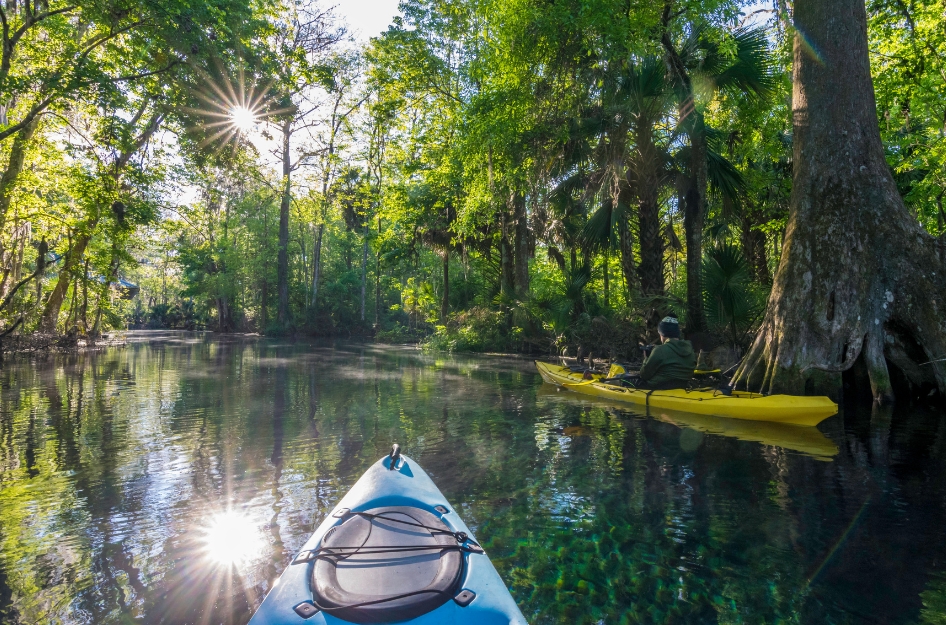
- Silver Springs State Park: Take a glass-bottom boat tour and experience the springs’ underwater beauty and wildlife. Don’t want to be quite that close to nature? Don’t worry. You can take a regular kayak or paddleboard down the river.
- The Canyons Zip Line and Adventure Park: Thrill-seekers can take a zip line over canyons and lakes.
- Horse Farm Tours: Take an insider’s look at the farms where champions are trained at places like Gypsy Gold Horse Farm.
- Fort King National Historic Landmark: Explore this historic site, which was a fort during the Second Seminole War.
7. The Crime Rates in Ocala Can Be a Concern
When looking at overall crime rates in Ocala, the city doesn’t have the best reputation. The city’s overall crime score is five, meaning it’s safer than just five percent of other communities in the U.S. Your chances of becoming a victim of crime are one in 28, which is higher than average. However, property crime is more common than violent crime.
8. The Best Places To Live in Ocala Offer Tailored and Diverse Lifestyles
From equestrian luxury and historic charm to active adult communities, there’s a great neighborhood in Ocala for everyone. Some of the best neighborhoods include:
- Carriage Hill: The calm and gated community of Carriage Hill is ideal for families located near great schools and lots of shopping and dining options.
- Ocala Historic District: A beautiful community with an abundance of renovated historic homes, situated close to the entertainment and vibrant atmosphere of downtown, which is ideal for singles and young professionals.
- Fore Ranch: This community offers diverse housing options and country club amenities that are best for retirees. It’s also close to Market Street at Heathbrook.
9. Ocala Has Rich Cultural & Arts Scenes
Ocala provides a vibrant and robust arts scene for a city of its size, blending visual arts with live performances and public art projects.
The Appleton Museum of Art is the highlight of the city’s art scene, featuring an extensive collection of European, American, Asian, African, and Pre-Columbian art. The “Horse Fever” project, on the other hand, is a community project that displays decorative horse sculptures created by local artists throughout the city.
You can also catch a comedy show or performance by the Ocala Symphony Orchestra, and the Reilly Arts Center is a must-visit.
10. Ocala’s Food Scene Has Everything From Comfort Food to International Offerings
The food scene in Ocala is the perfect blend of traditional Southern comfort food with diverse international offerings. The city’s best dining spots include:
- Harry’s Seafood, Bar & Grille: A lively downtown spot offering Cajun and Creole fare like jambalaya and shrimp and grits.
- La Cuisine French Restaurant: An authentic French bistro known for its dishes made from local and fresh ingredients. Try the escargots and duck confit!
- Mark’s Prime Steakhouse: A popular fine-dining restaurant with fresh seafood and fine steak options.
11. Golf Enthusiasts Living in Ocala Will Fit Right In
Golfing is another significant part of the Ocala lifestyle. The high density of public and private golf courses allows players of all skill levels to find the perfect spot.
The area features a mix of historic golf courses, like the Ocala Golf Club, and prestigious venues like the private Golden Ocala Golf & Equestrian Club, and an abundance of golf-centric communities that are built around golf courses.
12. The Economy in Ocala Is Transitioning Toward More Diversity
While Ocala’s economy has long been a traditional agricultural base, it has recently experienced high growth and transitioned to a diversified hub of healthcare, manufacturing, and logistics/distribution. HCA Florida Ocala Hospital, Adventhealth Ocala, and Rev Group are among the city’s top employers.
13. Ocala’s Educational Landscape Is Balanced
Ocala is served by Marion County Public Schools, which has an above-average “B” grade on Niche. Top schools within the district include the Madison Street Academy of Visual & Performing Arts and Forest High School.
Seeking higher education opportunities? You’ll find a community college-focused system that acts as a gateway to some of Florida's top universities. The College of Central Florida is the city’s primary institution, offering strong academic pathways to both the University of Florida and the University of Central Florida.
14. Most Residents Living in Ocala Will Need a Car
The city’s public transit provider is SunTran, which operates seven fixed routes that serve Ocala and Silver Springs Shores. Service runs most of the day Monday through Saturday, with no service on Sundays. Most routes converge at the Downtown Ocala Transfer Station.
Due to the system’s reliance on a single bus system, most residents will need a car to get around safely. You can use it to get around most major hubs, but it does not cover all outlying residential neighborhoods.
15. The Humid Climate in Ocala Can Feel Intense
Let’s face it: Florida’s climate is known for being humid. And Ocala’s climate is no exception. May through September bring the hottest temperatures and highest humidity levels in Ocala, with highs averaging around 80°F (humidity levels can push the heat index well into the 90s). Afternoon thunderstorms are also frequent during this period.
The winters are short and comfortable, with lows that typically don’t drop below 40°F. The spring and fall seasons bring the most pleasant weather, with milder temperatures and humidity.
16. Ocala Is Less Prone to Extreme Hurricane Conditions
Compared to Florida's coastal regions, Ocala is less likely to experience direct landfall impact from hurricanes. Nevertheless, it is still exposed to other weather-related risks, including tornadoes, inland flooding, and powerful winds.
Although the threat of coastal storm surges is low, Ocala is still prone to flash floods caused by heavy rainfall from tropical storms and hurricanes, which can affect low-lying properties and areas near rivers. Tornadoes can also form when a hurricane or storm passes over land, typically under the broad rotation of a hurricane.
17. Ocala’s Local Events Scene Caters to a Wide Range of Interests
The events calendar in Ocala is packed year-round, ranging from international equestrian competitions to community-driven festivals and celebrations, including:
- Longines League of Nations: An elite international show jumping series that takes place in part at the World Equestrian Center.
- First Friday Art Walk: A monthly event held from October through May, where the streets of downtown Ocala are transformed into an open-air gallery with live entertainment and artist booths.
- Ocala Food & Wine Festival: A multi-day culinary celebration that features celebrity chefs and tastings at the World Equestrian Center.
18. The Nightlife Scene in Ocala Is Relaxed
While Ocala’s nightlife scene is more limited than major cities like Miami and Orlando, there are still plenty of spots to enjoy a night out, which are concentrated in the downtown area:
- Mutiny Ocala: A popular pirate-themed establishment known for its creative cocktails and live music.
- The Lodge Ocala: A casual pub offering a wide selection of beers and live trivia/music bingo.
- The Thirsty Cobbler: A popular speakeasy experience with an upscale ambience and curated cocktails.
19. Growing Pains in Ocala Have an Impact on Its Infrastructure
Ocala is transitioning from a rural horse town to one of the fastest-growing metros in the U.S., which has put a heavy strain on the city’s roads. Interstate 75 is known for having some of the worst traffic in the state, which leads to significant increases in daily travel times. However, recent efforts are in the works to add more interstate lanes. An ongoing project will last over the next several years, which is expected to widen I-75 by more than 30 miles.
20. Ocala’s Convenient Location Allows for Easy Trips and Commutes
Ocala is strategically located in the center of Florida, making it an ideal location for day trips to various attractions and commuters. The city is within no more than a 90-minute drive to major theme parks and coastal locations such as:
- Orlando (1 hour and 20-minute drive): Home of major theme parks like Walt Disney World and Universal Studios, along with Orlando International Airport (MCO). Plus, easy access to cool Orlando Neighborhoods to explore — plus plenty of events to check out around the holidays.
- Gainesville (45–50 minute drive): Home of the University of Florida and great healthcare options.
- The Gulf Coast (1-hour drive): Spend some time along the water or go fishing at locations like Crystal River and Cedar Key.
Living in Ocala, FL — FAQs
Q: What is the average income in Ocala, FL?
A: The median household income in Ocala, FL, is $46,400, according to U.S. Census data.
Q: What part of Ocala is best to live in?
A: The Southeast and Southwest parts of Ocala are desirable due to their safety, great schools, and modern amenities.
Q: Is it expensive to live in Ocala, FL?
A: No, the city is generally not expensive compared to other major metropolitan areas of Florida. In fact, the state’s cost of living is 15.6 percent lower than the state average and 13 percent lower than the national average index.
Q: What are the cons of living in Ocala, Florida?
A: The city is undergoing rapid growth, which has led to drawbacks related to infrastructure and traffic strain. Harsh summer weather and high crime rates in certain areas are also some of the prominent cons.

Make your move flexible with a PODS portable moving container delivered right to your driveway.
Moving to Ocala, FL, With PODS
Make your move to Ocala flexible with a portable moving container delivered right to your driveway. Load it up on your own or have PODS connect you with local packing and loading services to help with the heavy lifting. Once you’re ready to go, have your container picked up and delivered to your new home, or to a PODS Storage Center if you need more time. One month of storage is built into the cost of every move, so there’s no need to feel rushed.
Visit PODS online for a free local moving quote or call 877-350-7637 for long-distance moving.
Editor’s note: For ease of reading, monthly rental prices were rounded to the nearest $25 and home values were rounded to the nearest $100.
*This article was written on behalf of PODS Enterprises, LLC (“PODS”). PODS does not warrant the completeness or accuracy of any information contained in this article and disclaims any liability for reliance upon the content herein.
| Quick Facts | Details |
|---|---|
| Population | 274,400+ |
| Median Age | 39.2 years |
| City Size | ~48.1 square miles; Marion County, Central Florida |
| Cost of Living | 13% below the national average; 15.6% below Florida average (score: 87) |
| Median Household Income | $46,400 |
| Average Home Value | $268,100 (↓ ~4% year-over-year) |
| Average 1-BR Rent | $1,325/month (vs. $1,725 Tampa; $1,600 Orlando) |
| Top Employers | HCA Florida Ocala Hospital, AdventHealth Ocala, Rev Group |
| Economy | Transitioning from agriculture to healthcare, manufacturing, and logistics |
| K–12 Schools | Marion County Public Schools (B grade, Niche); top schools include Madison Street Academy and Forest High School |
| Higher Education | College of Central Florida; pathways to University of Florida and UCF |
| Transportation | Car required; SunTran operates 7 bus routes (Mon–Sat); no Sunday service |
| Climate | Humid subtropical; hot summers (80°F+, high humidity May–Sep); mild winters |
| Weather Risks | Flash flooding, tornadoes; lower hurricane landfall risk than coastal Florida |
| Crime | Score: 5/100; safer than 5% of U.S. cities; ~1 in 28 chance of victimization |
| Notable Attraction | World Equestrian Center — largest equestrian complex in the U.S. |
| Outdoor Recreation | Silver Springs State Park, The Canyons Zip Line, horse farms, golf courses |
| Arts & Culture | Appleton Museum of Art, Reilly Arts Center, Ocala Symphony Orchestra |
| Best Neighborhoods | Carriage Hill (families), Historic District (young professionals), Fore Ranch (retirees) |
| Location / Proximity | Orlando: ~80 min · Gainesville: 45–50 min · Gulf Coast: ~60 min |
| Pros | Affordable, scenic, strong equestrian culture, growing job market |
| Cons | Higher crime, humid summers, traffic growth, fewer big-city amenities |

Your quote in 60 seconds
Get pricing tailored to your needs!
Related Articles

Retiring in Florida: The Pros and Cons of Calling the Sunshine State Your New Home
RetirementFlorida
Read more