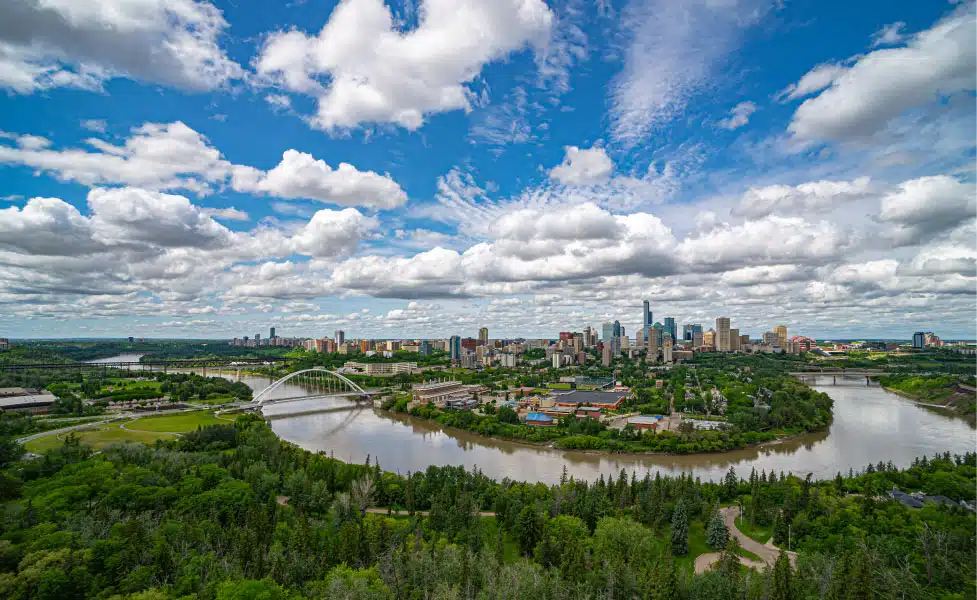
Moving to Edmonton: A Top 10 Guide for Living in Edmonton, the Heart of Canada
EdmontonCanada

Is Edmonton, Alberta, on your radar for a potential move? If you’re considering the “Gateway to the North” as your next home, you’re likely thinking about affordability, lifestyle, the economy, and climate. So, how does Alberta’s capital rate? You might be surprised to find a competitive job scene, lots of green space, big-city amenities, and one of the most affordable housing markets across Canada’s metro areas. Whether you’re moving to Edmonton from the U.S. or you’re relocating from elsewhere in Canada, our guide breaks down everything you need to know. Here’s more about living in Edmonton and why this city may be perfect for your next move.
| Planning a move to Edmonton? Start by getting a free moving quote from PODS. |
Edmonton at a Glance
- Population: Edmonton’s population is over 1.6 million.
- Median age: The median age in Edmonton is 37.6 years.
- City size: Edmonton's total metro area is about 3,640 square miles (9,427 sq. km).
- Location: The city is in the centre of the province of Alberta, about 185 miles (300 km) north of Calgary.
- Fun fact: Edmonton is known as Canada’s Festival City, with more than 50 festivals taking place each year.
10 Things To Know About Living in Edmonton Before Moving to Edmonton
The city known as the “Gateway to the North” has a lot going for it. Friendly residents, no provincial sales tax, and a rich culture and arts scene — plus extraordinary views of the Aurora Borealis. Here are 10 things to know before you make the move.
1. The Cost of Living in Edmonton Is Lower Than in Most Major Canadian Metro Areas
The overall cost of living in Edmonton is about 15 percent lower than in both Vancouver and Toronto. The bulk of those differences? Housing — which is super affordable in Edmonton compared with other Canadian cities.
Here’s a look at how living costs in Edmonton compare with other parts of Canada:
- Groceries: The cost of groceries is slightly below the national average.
- Utilities: Utilities are relatively reasonable, given Canadian winters.
- Gas: Gas prices are lower than in other metros.
- Taxes: There’s no provincial sales tax in Alberta.
2. Edmonton’s Housing Market Is Relatively Healthy
While cities like Vancouver and Toronto have taken major housing hits in the post-pandemic downturn, the Edmonton market has stayed pretty steady. Sales cooled a bit when interest rates rose, but prices haven’t yet taken a dive — another reason moving to Edmonton is a good call.
The average price of a home in Edmonton is $448,800, compared with $1.2 million in Vancouver and $938,800 in Toronto. Rents are more affordable here, too, although costs are rising: A one-bedroom apartment goes for slightly over $1,000, about 17 percent more than last month. Still, that’s practically a steal compared with almost $1,600 in Calgary and a whopping $2,500 in Vancouver.
A few more notable housing points to consider:
- Homeowner rates have declined nationally, but risen slightly in Edmonton.
- 63.6 percent of Edmonton homes are owner-occupied, with 34.4 percent housing renters.
- Experts predict modest growth of 1.6 percent in the coming year.

Edmonton neighbourhoods range from quiet suburbs to vibrant districts brimming with boutiques, dining, and entertainment.
3. Edmonton Neighbourhoods Are Diverse & Designed for Every Lifestyle
From walkable, culture-rich districts near the University of Alberta (U of A) to shaded suburban enclaves, the Edmonton neighbourhoods map varies widely in every way. Students, families, retirees, and everyone in between will find a pocket of the city to call home. Here are three of our top neighborhood picks:
Ritchie — Best for Young Families
The Ritchie neighbourhood, just minutes from Downtown, has become one of the most vibrant, welcoming districts among Edmonton neighbourhoods. Millennials flocked to the area a few years ago after an extensive revitalization that gave the neighbourhood a hipster-ish vibe. But there is still a good mix of longtime residents and young families making this walkable, friendly area their own. You’ll find a wide variety of housing options from single-family homes to upscale condos and luxury estates.
Residents of Ritchie have the best of both worlds: They’re close enough to Downtown for an easy commute or night on the town — but with plenty of local dining and shopping options nearby, there’s no need to venture far from home. Check out Ritchie Market, a renovated mixed-use destination with breweries, restaurants, and other local businesses. And for family outings, Mill Creek Ravine Park is the perfect spot to take the dog for a run (in a protected off-leash area), mountain bike across acres of trails, and enjoy a picnic in one of the park’s scenic spots.
Strathcona — Best for Professionals & Culture Lovers
This trendy neighbourhood, just south of Downtown near the University of Alberta, is a hub of arts, culture, and entertainment. The heart of the district is Whyte Avenue, which runs through the historic streets of Old Strathcona with a mix of restaurants, boutiques, and pubs. It’s a popular street for local families during daytime hours, and then comes to life after dark with a lively entertainment and bar scene.
Catch a show at the Old Strathcona Performing Arts Centre or check out contemporary exhibits at the Art Gallery of Alberta. Two of Edmonton’s can’t-miss local highlights: The Old Strathcona Farmers’ Market, for produce, arts, and specialty dining; and the Edmonton International Fringe Theatre Festival.
Aspen Gardens — Best for Families Seeking a Quiet, Peaceful Lifestyle
The name itself evokes the vibe of this tranquil, leafy enclave about 15 minutes southwest of Downtown. If you’re in the market for a more suburban experience with less congestion, large lots, and an upscale lifestyle, Aspen Gardens should be at the top of your list for living in Edmonton. The neighbourhood is almost entirely bordered by green space — the Whitemud Creek Ravine encircles the west and northern sections, there are two parks to the east, and the exclusive Derrick Golf and Winter Club borders the south. It’s an ideal neighbourhood for families of all sizes and stages, with an elementary and junior high school in the area and a high school nearby.
Another plus about moving to Edmonton’s Aspen Gardens? Safety. The crime rate in the neighbourhood is a healthy 40 percent lower than the national average and is also significantly lower than the crime rates in Edmonton and Alberta.
Besides the abundance of recreation, Aspen Gardens doesn’t offer a lot in the way of activities. But that’s just the way locals like it. For a casual dinner and drinks, the Canadian Brewhouse is a short drive away, and for a cozy coffee-and-pastries morning, pay a visit to nearby Caffe Beano.
4. Living in Edmonton Means Strong Academic Opportunities
Families moving to Edmonton will find the Edmonton Public Schools and Edmonton Catholic School Division, along with specialty programs including: French immersion, subject-specific academies, and alternative curricula. Most of the district’s elementary and secondary schools are located in the Greater Strathcona area of Edmonton.
As for post-secondary schools, most notable is the University of Alberta, ranked the No. 4 university in Canada by education analyst Quacquarelli Symonds — and an impressive No. 94 worldwide. Five of the school’s disciplines are considered No. 1 among universities across Canada: Petroleum Engineering, Chemical Engineering, Environmental Science & Engineering, Instruments Science & Technology, and Nursing.
5. There’s Always Something To Do in Edmonton
Edmonton has earned many nicknames over the years, but perhaps its most apropos is the City of Festivals. More than 50 festivals take place each year, from the Edmonton Folk Music Festival to the Taste of Edmonton and the Edmonton International Fringe Theatre Festival — which is the largest and longest-running of its kind in North America.
Besides festivals, here are a few of our favourite attractions for fun times in Edmonton:
- Whyte Avenue is a historic, trendy neighbourhood of boutiques, restaurants, and galleries.
- Rogers Place is home to the NHL’s Edmonton Oilers with a full schedule of concerts and other live entertainment year-round.
- Indigenous Peoples Experience is an immersive exhibit in Fort Edmonton Park exploring the culture of local First Nations and Métis Peoples.
- West Edmonton Mall features 800 stores, two hotels, over 100 dining venues, waterpark, and indoor amusement park.

Just 30 minutes from Edmonton, you’ll find Elk Island National Park, a UNESCO-designated biosphere reserve with camping, canoeing, wildlife watching, and extraordinary stargazing.
6. Edmonton’s River Valley & Park System Offer Endless Natural Beauty
Edmonton is home to more than 400 officially named parks, from the tidy Alex Decoteau Park with fountains, a community garden, and an off-leash dog area, to Whitemud Park, where tobogganing and horseback riding are the main attractions.
North America’s largest urban park is also in Edmonton. The North Saskatchewan River Valley is even bigger than New York City’s Central Park, with 160 kilometres of pathways meandering through Edmonton along the “Ribbon of Green” network. No matter where you live in the city, you’re not far from this incredible recreational area offering hiking, running, cycling, canoeing, and more.
If you want to get out of the city a bit, just 30 minutes from Edmonton, you’ll find Elk Island National Park, a UNESCO-designated biosphere reserve with camping, canoeing, wildlife watching, and extraordinary stargazing.
7. The Edmonton Economy & Job Market Remain Resilient
While historically tied to oil and gas, Edmonton’s economy has diversified quite a bit over the past decade — particularly into the tech arena, bolstered by partnerships with the University of Alberta. Government, healthcare, education, and construction also now account for a substantial share of employment.
Here are a few quick economic stats for Edmonton:
- Median family income is $105,200, up 9.77 percent in the past five years.
- To live comfortably, a family of four in Edmonton needs to earn $100,000 to $120,000 per year, based on the 50/30/20 budget rule (50 percent of income goes to necessities; 30 percent to discretionary spending; and 20 percent to savings and debt repayment).
- Unemployment dropped to 7.5 percent in December 2025 from a high of 8.7 percent in September 2025.
- The Edmonton cost of living is lower than in many U.S. cities — 23.4 percent lower than in Los Angeles, for instance.
8. Living in Edmonton Requires Warm Clothes — Plus Sunglasses
Winters are cold, long, and bright! Although January low temps hover around 8°C, the days are generally sunny — and that goes for summer, too. In fact, in June, the sun doesn’t go down until 10:30 p.m., which helps make the season feel longer and gives Edmonton residents more time to enjoy their gorgeous landscape.
9. Taxes in Edmonton Are Lower Than You Might Expect
One of the biggest perks of living in Edmonton? No provincial sales tax in Alberta. Residents only pay a 5 percent federal Goods and Services Tax (GST) — a major bonus compared with provinces like Ontario or British Columbia, where combined sales taxes can reach as high as 15 percent.
If you’re moving to Edmonton from the U.S., the comparison gets a little tricky:
- Sales tax: Alberta’s 5 percent GST is lower than sales tax in many U.S. states.
- Income tax: It depends where you’re coming from — for instance, a high-tax state like California or New York will make Alberta’s moderate rates seem like a relief, but if you’re moving to Edmonton from Florida or Tennessee, where there aren’t any state income taxes, Alberta won’t feel so great.
- Healthcare: Canadians don’t generally pay private insurance premiums; the nation has a publicly funded system. The low-to-no healthcare costs can significantly offset Alberta’s potentially higher income tax rates.
For many families living in Edmonton after moving from the U.S., or even another Canadian province, the financial balance works out well. And when you pair those tax benefits with Edmonton’s lower housing costs, it gets even better.
10. Moving to Edmonton From the U.S. Is Doable — but Requires Careful Planning
Immigration paperwork, employment considerations, and healthcare registration are just a few of the issues — and potential complications — Americans moving to Edmonton need to think about. Here’s a brief look at what you need to know before you pack your bags.
Immigration Options Depend on Your Work Situation
If you have a job offer in Edmonton, the process may move more quickly and easily. But, generally, your profession and education will factor into eligibility in the Alberta Advantage Immigration Program, which requires nominees to have skills to fill job shortages or plan to start/buy a business in Alberta.
Work Permits & Residency Follow a Timeline
Here’s how that timeline might look for a typical American considering moving to Edmonton:
- Confirm eligibility — either under Express Entry, a provincial program, or employer-sponsorship.
- Gather key documents — passport, school transcripts, work history, etc.
- Secure a job offer — if needed.
- Apply for a temporary work permit.
- Receive an invitation to apply — followed by medical exams, background checks, and other verifications.
- Apply for permanent residency — if you started on a work permit.
Healthcare Coverage Takes Effect Once You’re Living in Edmonton
Besides the tax benefits, universal healthcare is a definite draw for many Americans moving to Edmonton. With the Alberta Health Care Insurance Plan, your premium will essentially disappear.
There’s Lots of Paperwork Involved in Cross-Border Logistics
Just a few more things to consider in order to officially become an expat living in Edmonton:
- Passport renewal and driver’s licence/government ID
- Vehicle importation compliance
- Currency exchange info
- Tax implications for retirement accounts or other assets

When you move to Edmonton with PODS portable moving containers, you get the best of both worlds.
Your Top Options for Moving to Edmonton
The next step: Deciding how you’re going to get there. The option you choose depends on your budget, how far you are from Edmonton, and how hands-on you want to be during your move. You have three basic choices:
Go DIY With a Rental Truck
This is generally the cheapest option, especially if you’re not moving too far away. Remember, you get what you pay for, though. You’ll handle packing, loading, driving, and unloading — which saves dollars but takes time, effort, and a degree in logistics.
Hire Full-Service Movers
Convenience is the name of the game with full-service movers — but that comes at a price. This method is especially helpful for long-distance and cross-border relocations, leaving you free to manage all the other considerations.
Make Your Move Flexible With PODS Portable Moving Containers
When you move to Edmonton with PODS portable moving containers, you get the best of both worlds. Your storage container will be delivered to your driveway for loading, then picked up and delivered to your new house when you’re ready. In between, you’ll have the flexibility to pack and load on your own time, when it’s most convenient for you. If your move-in timeline changes, not to worry: One month of storage at a secure PODS storage facility is included with the cost of every move.
Moving to Edmonton — FAQs
Q: What is the 15-minute rule in Edmonton?
A: A “15-minute city” is an urban planning concept by which residents can access essential services (schools, grocery stores, parks, etc.) with just a 15-minute walk or bike ride. In Edmonton, the goal is to create 15-minute communities where residents can easily access daily needs without traveling far.
Q: Is moving to Edmonton a good idea?
A: Cold winters aside (and that’s not a deal-breaker for a lot of people), yes! Edmonton is a welcoming, affordable city with low crime, good schools and neighbourhoods, and room to roam.
Q: What are the pros of living in Edmonton?
A: The long list of pros includes sunny weather and nice people, plus:
- Affordable housing
- No sales tax in Alberta
- Parks everywhere
- Resilient job market
Q: What are the cons of living in Edmonton?
A: Do we have to mention it again? Long, cold winters. Need a few more? A lack of public transit, isolation from other big cities (getting to U.S. hubs requires a flight), and fewer urban amenities than cities like Toronto and Vancouver.
Q: What should I know before moving to Edmonton?
A: Here’s a can’t-miss tip: Get an engine block heater for the winter months. It's not a hugely expensive item to have added to your car or truck, and you’ll be thankful for it when your car fires right up even as the temperature dips below -20℃.
Q: How much do you need to make to live comfortably in Edmonton?
A: Based on Edmonton’s living wage average of $22.30, a family of four needs to earn $100,000 to $120,000 per year to live comfortably.
Q: Is $80,000 a good salary in Edmonton?
A: $80,000 is definitely considered a good salary for an individual living in Edmonton, where the average annual salary is just above $52,000.
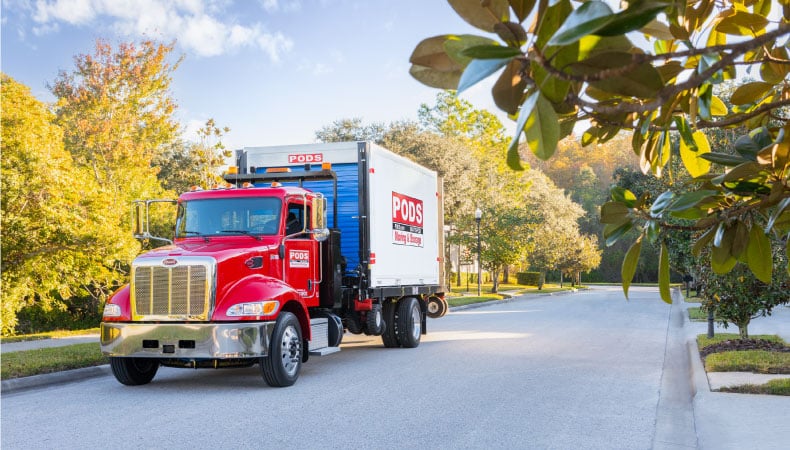 Moving to Edmonton can be flexible and convenient with a portable PODS moving container delivered right to your driveway.
PODS Makes Moving to Edmonton Flexible
Whether you’re coming from across Canada or a far-flung part of the U.S., make your move to Edmonton flexible with PODS portable moving containers. Pack and load at your own pace with the storage container parked right outside your house, and when it’s time to hit the road, PODS will pick up the container and deliver it to your new home.
Need a hand with the heavy lifting? PODS can refer you to local packing and loading services to help out. And if your new home isn’t quite ready when you are, not to worry: Simply store your container in a PODS storage facility until you’re ready for it. With one month’s storage built into the cost of every move, you can take your time without feeling rushed.
Visit PODS online for a free local moving quote or call 877-350-7637 for long-distance moving.
Tony Caradonna is a freelance writer who lives with his wife in Toronto, ON. A more recent PODS Blog contributor, Tony loves exploring the world and immersing himself in exciting locales with his travel guitar and Michelin guide in hand. When not travelling, he is either golfing or writing about this most addictive pastime on his blog, TheGolfingLife.ca.
Editor’s note: For ease of reading, monthly rental prices were rounded to the nearest $25 and home values were rounded to the nearest $100. Home values in the millions were rounded to the nearest $100,000.
*This article was written on behalf of PODS Enterprises, LLC (“PODS”). PODS does not warrant the completeness or accuracy of any information contained in this article and disclaims any liability for reliance upon the content herein.

Your quote in 60 seconds
Get pricing tailored to your needs!